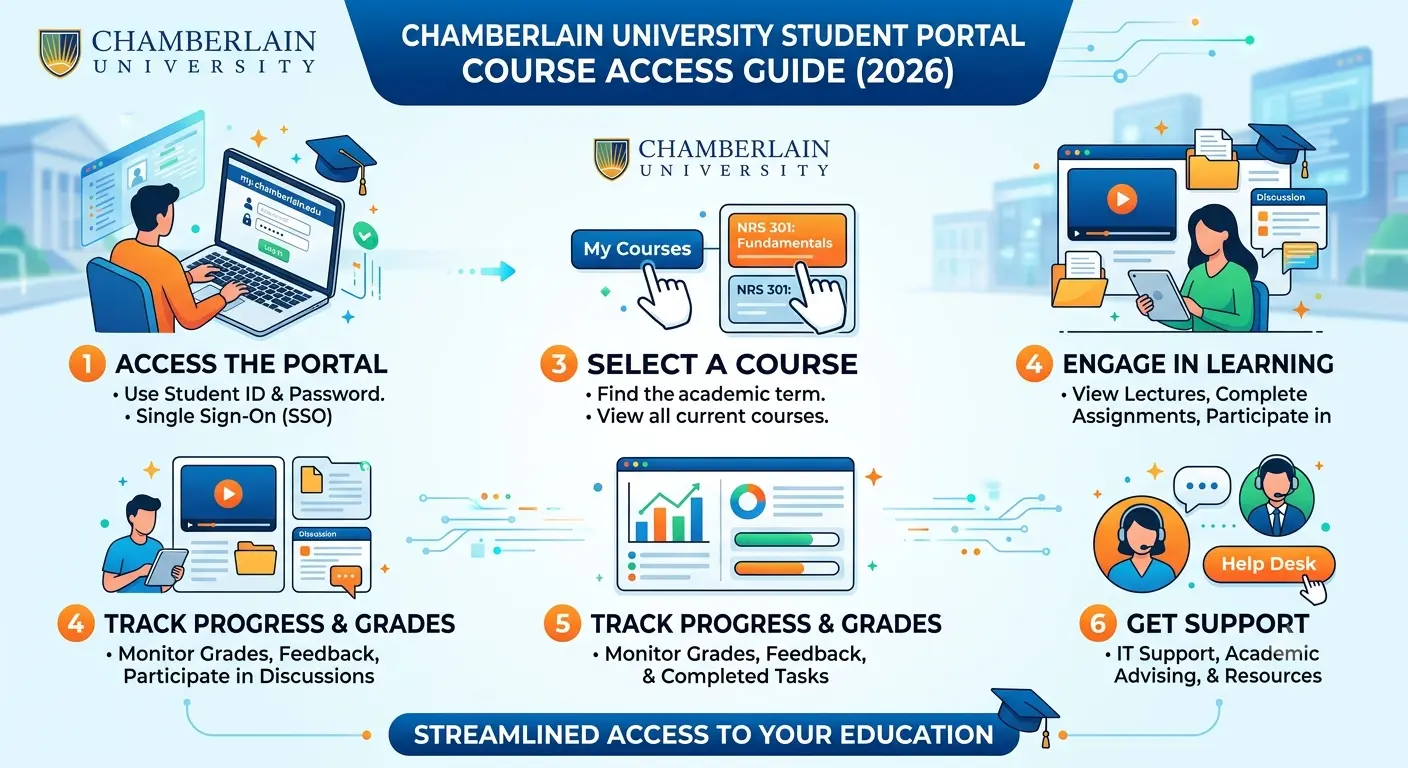
The Chamberlain University Student Portal is the official online gateway that connects students with their academic courses, learning resources, university email, financial information, and student services. Whether you’re studying on campus or online, the Chamberlain University Student Portal provides secure access to everything needed throughout your educational journey.
Through the portal, students can sign in to Canvas LMS, access course modules, download digital textbooks, participate in discussion boards, complete assignments, communicate with instructors, and monitor academic progress—all from a single dashboard.
What Is the Chamberlain University Student Portal?
The Chamberlain University Student Portal is the main online hub where students can access the university’s academic resources and student services in one place. Instead of switching between different systems to check courses, grades, email, or important university updates, students can sign in using their Single Sign-On (SSO) credentials and access the services available to them.
Through the portal, students can typically find and manage resources such as:
- Canvas Learning Management System (LMS)
- Online courses and digital classrooms
- Student email
- University library resources
- Digital textbooks and eTextbooks
- Financial aid information
- Academic advising
- Student support services
- Academic calendars and important dates
The portal makes it easier for students to keep track of their academic responsibilities and stay connected with Chamberlain University throughout their studies. Once logged in, students can quickly navigate to the tools and resources they need for their current academic session.
Who Can Use the Chamberlain University Student Portal?
The Chamberlain University Student Portal is designed to support different members of the university community. Students, faculty, and staff can use the portal to access the academic tools and resources they need, although the services available may vary depending on their role.
Enrolled Students
Current Chamberlain students can use the portal as a central place to manage their day-to-day academic activities. Depending on their program, they can:
- Access their courses through Canvas
- Submit assignments and coursework
- Check grades and academic progress
- Download course materials
- Read important class announcements
- Communicate with instructors
Online Students
Students enrolled in online programs can use the Chamberlain University Student Portal to manage most of their academic work remotely. This may include accessing virtual classes, reviewing course materials, submitting assignments, checking grades, and staying in touch with instructors.
International Students
Eligible international students can also use the portal to stay connected with their academic programs. Common activities include:
- Accessing online courses
- Checking academic schedules
- Using university email
- Communicating with faculty
- Accessing digital learning resources
The exact services available can depend on the student’s program and university status.
Faculty and Staff
Chamberlain faculty and staff use the university’s online systems to support teaching and student communication. Faculty members may be able to:
- Manage their courses
- Upload course and learning materials
- Review and grade assignments
- Communicate with students
- Publish class announcements
Overall, the portal and connected university systems provide a convenient way for students and faculty to manage academic activities and stay connected throughout the term.
Benefits of Using the Chamberlain University Student Portal
The Chamberlain University Student Portal offers numerous advantages that improve the student learning experience.
Major benefits include:
- Secure Single Sign-On (SSO)
- 24/7 course access
- Canvas LMS integration
- Digital textbook access
- Online assignment submission
- Grade tracking
- Student email integration
- Academic support resources
- Mobile-friendly learning
- Cloud-based learning environment
How to Access the Chamberlain University Student Portal
Signing in to your Chamberlain University Student Portal is usually a quick process. You just need your Chamberlain login credentials and, if required, your authentication method.
Follow these steps to get started:
Step 1: Visit the Official Chamberlain Website
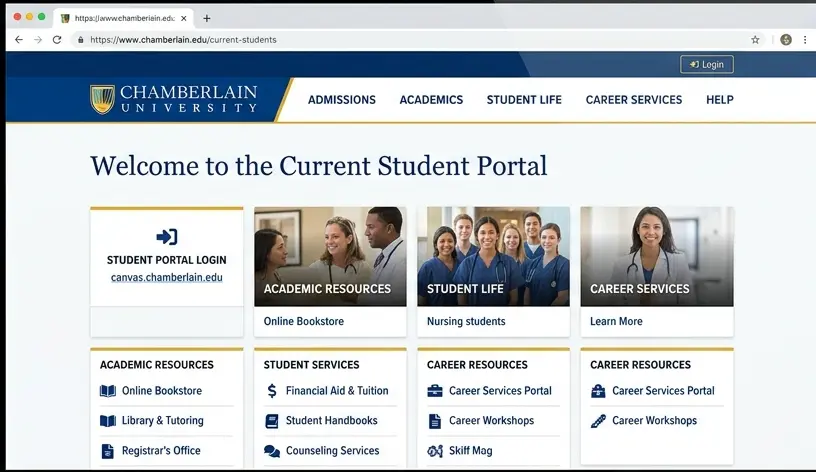
Open a browser such as Chrome, Edge, Safari, or Firefox and go to the Chamberlain University Current Students page:
Chamberlain University Current Students
This is the university’s official student page, where you can find links to various student services and resources.
Step 2: Select the Sign In Option
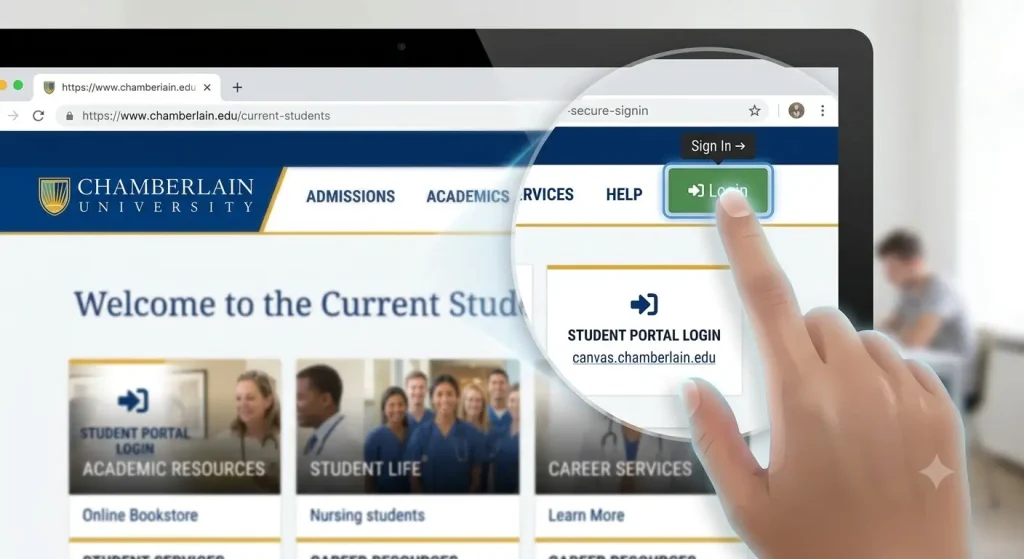
Look for the Sign In option on the page and select it. You may be redirected to Chamberlain’s secure sign-in or authentication page.
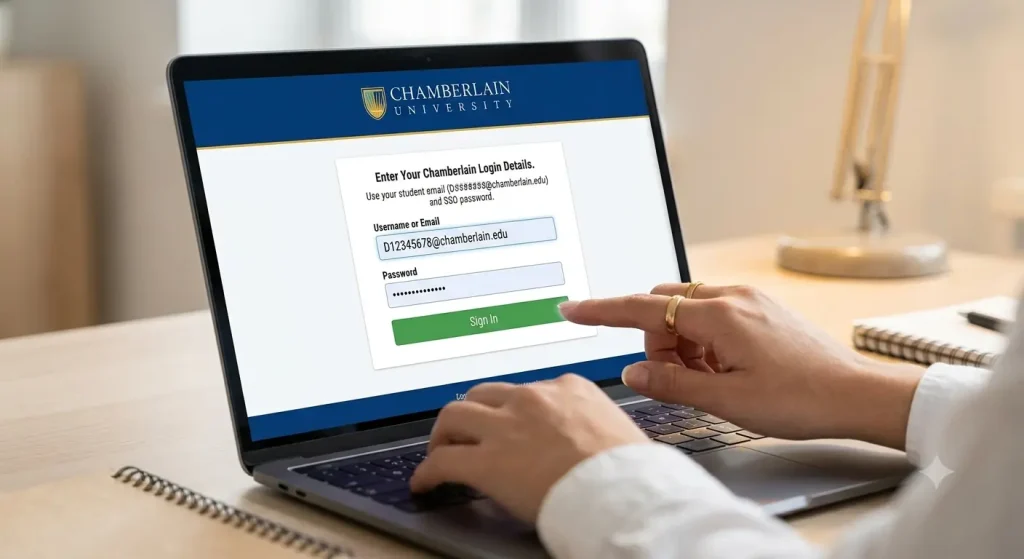
Step 3: Enter Your Chamberlain Login Details
Enter the credentials associated with your Chamberlain student account. These may include your official Chamberlain student email address and your Single Sign-On (SSO) password.
For example, a student email may follow a format similar to:
Make sure your login information is entered correctly before continuing.
Step 4: Complete the Security Verification
If your account has Multi-Factor Authentication (MFA) enabled, you may need to verify your identity before access is granted. Depending on your account settings, this could involve an authenticator app, text-message verification, or another security method.
Once the verification is complete, you should be able to access the available student services and academic resources associated with your account.
Chamberlain Dashboard Overview
After signing in, the Chamberlain University Student Portal dashboard becomes your academic homepage.
Common dashboard sections include:
- Canvas LMS
- Student Email
- Library
- Financial Aid
- Academic Calendar
- Student Services
- Account Settings
- Notifications
Everything is organized for quick navigation.
Accessing the Canvas Learning Management System (LMS)
Canvas is the learning management system used by Chamberlain University to organize online course content and academic activities. Once you sign in, you can use Canvas to view your courses, access learning materials, submit assignments, and keep up with announcements.
How to Open Canvas
To access Canvas through your Chamberlain account:
- Sign in to the Chamberlain University Student Portal.
- Find the Canvas LMS tile or link in the available student services.
- Click the Canvas option to continue.
- Give the system a moment to load and authenticate your account.
- Once you’re signed in, you’ll see the courses currently available to you.
View Your Registered Courses
After opening Canvas, the dashboard displays the courses that have been published and made available to your account. Each course card can provide useful information, such as:
- Course name
- Instructor
- Session or course dates
- Recent announcements
- Assignments
- Weekly modules and learning materials
To enter a course, simply select its course card. From there, you can access the virtual classroom, review course materials, check upcoming work, and follow the learning activities for that course.
Dashboard Overview
Once you sign in, your course dashboard gives you access to the main tools and resources you need for your studies. Each course is usually divided into different sections, making it easier to find assignments, learning materials, grades, and class updates.
Depending on the course, you may see navigation options such as:
- Home – The main page for the course and recent updates.
- Modules – Course lessons, readings, videos, and other learning materials.
- Assignments – View upcoming tasks and submit your coursework.
- Discussions – Participate in class discussions and respond to posts.
- Grades – Check your grades and review feedback from instructors.
- People – View instructors, classmates, or other course participants.
- Announcements – Read important messages and course updates.
- Files – Access documents and other shared course resources.
- Syllabus – Review course requirements, policies, schedules, and expectations.
It’s a good idea to check these sections regularly. Staying familiar with the dashboard can help you keep track of deadlines, course announcements, and other important academic activities.
Accessing Course Materials and Learning Resources
Weekly Learning Modules
Many instructors organize their Canvas courses into weekly learning modules. This structure helps students follow the course schedule and work through lessons in a logical order.
A typical weekly module may contain:
- Lecture slides and presentations
- Required reading
- Recorded lectures or videos
- Learning objectives
- Practice activities
- Quizzes and assessments
- Assignment instructions
For the best learning experience, students should work through the modules in the recommended order and keep an eye on any deadlines listed within the course.
Downloading Course Materials
Canvas also allows students to access and, where enabled, download course materials for their studies. Depending on the course, resources may include:
- PDF notes
- PowerPoint presentations
- Reading guides
- Assignment templates
- Additional study materials
Saving these resources to your device can be useful when you need to review course content without being actively logged into Canvas.
Accessing Digital eTextbooks
Some Chamberlain courses provide access to electronic textbooks through integrated digital learning platforms. When available, students may find resources such as:
- Required course textbooks
- Reference materials
- Interactive learning resources
- Digital study tools
Access to these materials can vary by course and program, so students should check their individual course for the resources provided.
Virtual Labs and Simulations
Certain nursing, healthcare, and science courses may include virtual labs or simulation-based learning activities. These tools give students an opportunity to practice concepts in an interactive environment.
Depending on the program and course, activities may include:
- Clinical simulations
- Nursing scenarios
- Interactive laboratory exercises
- Virtual patient-care activities
These simulations complement traditional coursework by giving students opportunities to apply what they learn in practical, controlled learning environments.
Technical Requirements
For the best experience using the Chamberlain University Student Portal, students should use updated technology.
Recommended requirements include:
| Requirement | Recommendation |
|---|---|
| Browser | Google Chrome or Mozilla Firefox |
| Internet | Stable high-speed connection |
| Device | Laptop or Desktop |
| Pop-ups | Enable for Chamberlain websites |
| PDF Reader | Installed |
| Camera & Microphone | Required for some online activities |
Keeping your browser updated helps avoid compatibility issues.
What’s Next?
Now that you’ve learned how to sign in to the Chamberlain University Student Portal, access Canvas LMS, open your online courses, and navigate weekly modules, the next section explains how to submit assignments, participate in discussions, check grades, access the university library, use academic support services, and troubleshoot common course access issues.
Learning Resources Available Through the Chamberlain University Student Portal
The Chamberlain University Student Portal is more than just a place to access your courses. Once you sign in, you can find a range of academic tools and resources designed to make studying easier throughout your program.
Depending on your course and student status, you may be able to access textbooks, library resources, tutoring, academic schedules, instructor announcements, student email, and other learning services from the university’s online systems.
Canvas Course Modules
Your Canvas courses are generally divided into organized modules, making it easier to follow lessons week by week. A module may include:
- Lecture notes and presentations
- Learning objectives
- Recorded lectures or videos
- Required readings
- Assignments
- Practice quizzes
- Discussion activities
- Module summaries
Following the modules in the recommended order can help you stay organized and keep up with the course schedule.
University eTextbooks
Many Chamberlain courses provide access to digital textbooks and other online reading materials. Depending on your program, you may find required textbooks and additional resources through the course’s digital book platform.
Available features may include:
- Required nursing and course textbooks
- General education materials
- Interactive learning content
- Searchable digital references
- Highlighting and note-taking tools
Having textbooks in digital form makes it easier to study from a computer or other supported device whenever you need to review course material.
Virtual Labs and Clinical Simulations
Students in nursing, healthcare, and science-related programs may also use virtual labs and simulation-based learning activities. These tools provide opportunities to apply concepts learned in class in realistic, controlled scenarios.
Depending on the course, students may work with:
- Virtual patient simulations
- Clinical decision-making exercises
- Laboratory activities
- Health assessment exercises
These experiences can help connect theoretical knowledge with practical situations students may encounter in their academic or professional training.
University Library Resources
The university’s online library gives students access to a wide range of academic and research materials. Instead of relying only on general internet searches, students can use library resources to find information for assignments, research projects, and academic papers.
Resources may include:
- Peer-reviewed journals
- Nursing and healthcare research databases
- eBooks
- Clinical guidelines
- Evidence-based practice resources
- APA citation and writing guides
Using reliable academic sources can make research more effective and help students produce stronger academic work.
Academic Support Center
Students who need extra assistance can also take advantage of academic support services available through the university. These resources are intended to help students improve their study habits, writing skills, and overall academic performance.
Support may include:
- One-on-one tutoring
- Writing assistance
- APA formatting guidance
- Study skills workshops
- Time-management resources
- Academic coaching
Using these services early can be especially helpful when you’re struggling with a difficult subject, preparing an assignment, or trying to improve your study routine.
Manage Assignments Through the Chamberlain University Student Portal
One of the biggest advantages of the Chamberlain University Student Portal is the ability to manage coursework from anywhere. After opening your course in Canvas LMS, you’ll find every assignment, discussion, quiz, and project organized by week or module.
Instead of relying on emails or printed schedules, students can monitor all coursework through one secure dashboard.
Types of Assignments Available
The Chamberlain University Student Portal supports various academic activities, including:
- Weekly assignments
- Nursing clinical documentation
- Discussion board posts
- Research papers
- APA writing projects
- Online quizzes
- Midterm examinations
- Final examinations
- Group projects
- Reflection journals
Students should review assignment instructions carefully before submission.
How to Submit an Assignment Through Canvas
Submitting coursework through Canvas is usually straightforward. Before you begin, make sure your assignment is complete and saved in an accepted file format.
Step 1: Sign In to Your Student Account
Open the official Chamberlain University Current Students page:
Chamberlain University Current Students
Sign in using your Chamberlain University credentials.
Step 2: Open Canvas
After signing in, locate and open Canvas LMS from the available student services or dashboard.
Step 3: Select Your Course
Find the course where the assignment was posted and select it to enter the course page.
Step 4: Open Assignments
From the course navigation menu, select Assignments. You’ll see the coursework and submission tasks associated with that course.
Step 5: Review the Assignment
Select the assignment you want to complete and carefully check the information provided by your instructor, including:
- Assignment instructions
- Due date and time
- Submission requirements
- Accepted file types
- Any additional requirements or restrictions
Step 6: Upload Your Work
When you’re ready, select Submit Assignment and upload your completed file.
Depending on the assignment settings, Canvas may accept formats such as:
- DOCX
- PPTX
- Excel files
- Image files, when permitted
Step 7: Submit and Confirm
After selecting your file, follow the on-screen instructions and click Submit.
Canvas should display a confirmation after the submission has been successfully recorded. It’s a good practice to keep the submission confirmation or receipt until your instructor has graded the assignment.
Participate in Discussion Boards
Discussion forums are an important part of many online courses.
Students use discussion boards to:
- Share ideas
- Respond to classmates
- Ask academic questions
- Participate in graded discussions
- Practice evidence-based communication
Many nursing courses require weekly discussion participation.
Check Grades and Instructor Feedback
The Chamberlain University Student Portal and Canvas make it easy to keep track of your academic performance. After an assignment, quiz, or discussion has been graded, you can review the result and read any comments left by your instructor.
To check your grades, open:
Canvas → Grades
Depending on your course, the Grades section may show:
- Assignment scores
- Quiz results
- Discussion grades
- Instructor comments and feedback
- Overall course percentage
- Missing or incomplete assignments
Take a few minutes to review instructor feedback after each graded activity. It can help you understand where you did well and what you should improve on future assignments.
Track Your Academic Progress
Canvas includes several features that can help you stay organized throughout the semester. Your course dashboard can give you a quick overview of upcoming work and important deadlines.
Useful features may include:
- Weekly course modules
- Assignment due dates
- Course completion information
- Calendar events
- To-do lists
- Assignment reminders
Checking your Canvas dashboard regularly can help you stay ahead of deadlines and reduce the chance of missing an important assignment.
Access the University Library
Students can also use the university’s online library to find reliable academic and research materials. Library resources can be especially useful when preparing research papers, discussion posts, clinical assignments, and larger academic projects.
Depending on your program and access level, you may find:
- Peer-reviewed journals
- Nursing and healthcare databases
- eBooks
- Research articles
- APA citation resources
- Evidence-based practice materials
Common research databases students may encounter include CINAHL, PubMed, ProQuest, and EBSCOhost. These resources can help you find credible sources instead of relying solely on general search engines.
Academic Support Services
If you need help with coursework, writing, studying, or academic planning, Chamberlain provides various support resources for students. The services available to you may depend on your program and student status.
Support options can include:
- Writing assistance
- APA formatting guidance
- Academic success resources
- One-on-one tutoring
- Study skills workshops
- Faculty office hours
- Academic advising
Don’t wait until you’re falling behind to use these resources. Getting support early can make it easier to understand difficult topics and stay on track.
Access Your Student Email
Your official Chamberlain student email is an important part of university communication. Instructors and university departments may use it to send information about your courses, registration, financial aid, and other student-related matters.
You may receive messages about:
- Course announcements
- Faculty communication
- Financial aid
- Registration and enrollment
- University updates
- Clinical placement information
Make it a habit to check your university email regularly so you don’t miss important messages or deadlines.
Use Mobile Devices for Learning
You don’t always need to sit at a computer to keep up with your coursework. Where supported, mobile apps can make it easier to check course updates and stay connected while you’re away from your desk.
Students may use apps such as:
- Canvas Student
- Microsoft Outlook
- Microsoft Teams
- Microsoft Authenticator
Mobile access can allow you to check announcements, review grades, participate in discussions, submit assignments, and receive important notifications.
This flexibility can be particularly useful when you’re studying from home, traveling, working, or attending clinical activities.
Common Course Access Problems
Although the Chamberlain University Student Portal is reliable, students occasionally encounter issues.
| Problem | Possible Solution |
|---|---|
| Course not showing | Wait up to 48 hours before the session begins or contact your instructor. |
| Unable to access Canvas | Sign out and log back into the portal. |
| Assignment upload failed | Verify file size and supported format. |
| Video lectures not loading | Clear browser cache or switch browsers. |
| Login session expired | Sign in again using your university credentials. |
| eTextbook unavailable | Confirm course registration and publisher activation. |
If problems continue, contact Chamberlain Technical Support through the Current Students portal.
Best Practices for Online Learning
Successful students develop consistent study habits.
Helpful tips include:
- Log in every day.
- Review announcements first.
- Download the syllabus during Week 1.
- Complete assignments before deadlines.
- Participate in discussion boards.
- Back up important coursework.
- Keep your browser updated.
- Use a reliable internet connection.
- Sync deadlines with your calendar.
- Ask for help early if you’re struggling.
Frequently Asked Questions (FAQs)
How do I access my online courses?
Log in through the Chamberlain University Student Portal, then open Canvas LMS to view all published courses.
When do courses appear in Canvas?
Courses usually become available 24–48 hours before the official session start date, although timing may vary.
Can I access the portal from my phone?
Yes. Students can use the official Canvas Student mobile app along with Microsoft Outlook and Microsoft Authenticator for secure access.
Where can I find my course syllabus?
Open your course in Canvas and navigate to the Syllabus section or the first weekly module.
How do I submit assignments?
Open the assignment page in Canvas, upload your file, and click Submit Assignment.
Where can I check my grades?
Select Grades inside Canvas to review assignment scores, instructor feedback, and overall course progress.
What if I can’t see my registered course?
Wait until the course publishing window opens. If it still doesn’t appear after the expected release time, contact your instructor or Student Services.
Can international students use the Chamberlain University Student Portal?
Yes. International and online students can access eligible academic resources, Canvas courses, email, and support services using their university credentials.
Final Thoughts
The Chamberlain University Student Portal serves as the central gateway for managing every stage of your academic experience. From accessing Canvas LMS and digital textbooks to submitting assignments, reviewing grades, participating in discussions, and connecting with academic support, the portal brings essential university services together in one secure location.
By logging in regularly, keeping your student email active, reviewing course announcements, and making full use of available learning resources, you can stay organized and maximize your success throughout each session. Whether you’re attending classes on campus, online, or in a hybrid format, the Chamberlain University Student Portal provides the tools you need to learn efficiently and stay connected.
Official Resources
| Resource | Official Website |
|---|---|
| Chamberlain Current Students Portal | https://www.chamberlain.edu/current-students |
| Canvas LMS Information | https://community.canvaslms.com |
| Microsoft Authenticator | https://www.microsoft.com/security/mobile-authenticator-app |