When comparing colleges, it is important to understand both Chamberlain University tuition fees & financial aid 2026 undergraduate, Chamberlain university tuition fees & financial aid 2026 nursing, and the overall Chamberlain University tuition per year along with the Chamberlain College of Nursing tuition per semester structure. The total cost of attendance includes tuition, housing, food, books, supplies, transportation, and other daily expenses. The Chamberlain University tuition nursing programs may vary depending on the campus and course load, so students should always review updated fee details before enrolling.
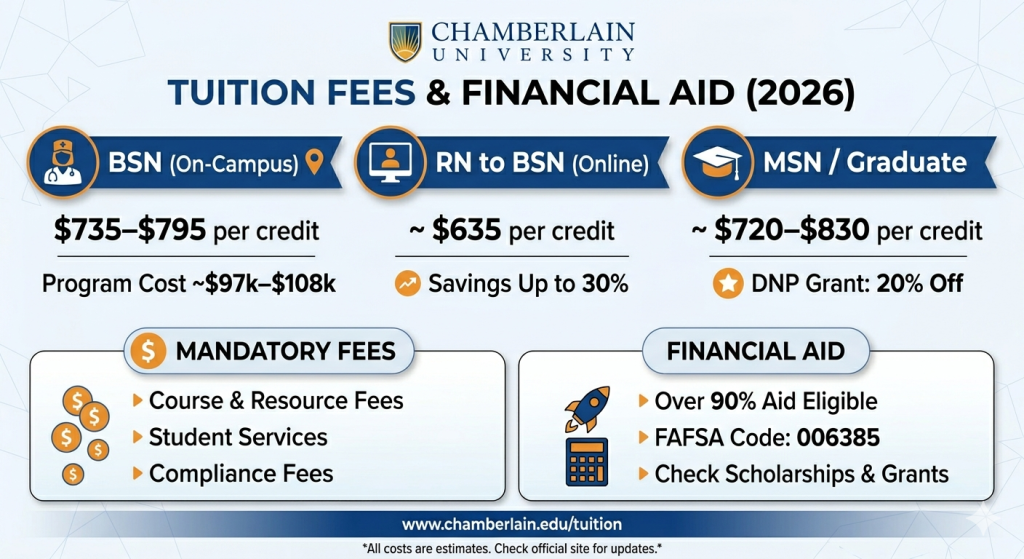
The net price is the actual amount you will pay after applying scholarships, grants, and federal student aid. For support, students can contact the Chamberlain financial aid office or reach the Chamberlain financial aid number to get personalized assistance about funding options. Chamberlain University helps reduce overall expenses through multiple nursing scholarships, grants, and flexible financial aid 2026 programs, ensuring students can manage costs while focusing on their education and career goals.
Chamberlain University Tuition Fee & Expenses (Explained)
Understanding the real cost of attending Chamberlain University is essential for students planning their nursing or healthcare education. Below is a simplified breakdown of tuition, net price, and financial aid availability, based on the most recent data.
Tuition & Fees (2025–2026)
Chamberlain University’s estimated annual tuition and fees total:
$20,604
This reflects the standard cost before factoring in housing, food, books, transportation, or personal expenses.
Average Net Price (After Aid)
For federal loan recipients in 2025–2026, the average net price was:
$26,362
This number represents what students typically pay after scholarships and federal aid are applied.
Net Price by Family Income (2025–2026)
The net price varies depending on household income. Here’s the estimated average cost students pay after financial aid:
| Family Income | Average Net Cost/Expenses |
|---|---|
| $0–$30,000 | $25,016 |
| $30,001–$48,000 | $25,235 |
| $48,001–$75,000 | $26,825 |
| $75,001–$110,000 | $29,254 |
| $110,001+ | N/A |
This helps students estimate how much they may actually pay depending on their financial situation.
Chamberlain University Financial Aid Statistics and Funding Options
Financial aid helps students cover college costs and can be awarded based on financial need or academic merit.
- Need-based aid is determined by the FAFSA, which looks at your family’s ability to pay. This can include federal student loans and work-study programs.
- Merit-based aid (non-need-based) is given for strong academics, special skills, or achievements.
Chamberlain University is G.I. Bill certified and participates in the Yellow Ribbon Program, making it supportive of military-connected students.
The school also provides a variety of need-based and merit-based scholarships and grants.
Application Deadline for Financial Aid:
- Submit the FAFSA as early as possible, as some funds are limited and awarded on a first-come, first-served basis.
Complete guide on Chamberlain University Student Services
Types of Financial Aid Available
Below are the different types of financial aid students can apply for.
Scholarships (Easy Explanation)
Scholarships are money that helps you pay for college — and the best part is you don’t have to pay it back.
There are two main types:
- Need-based scholarships: These are for students who need financial help.
- Merit-based scholarships: These are for students who do really well in school, sports, or other activities.
You can also get scholarships for things like:
- Helping your community
- Having special talents or hobbies
- Your personal background
- A parent’s job or military service
Some students get enough scholarship money to pay for most or even all of their school costs, including books and living expenses.
Below are the types of scholarships and grants you may find at Chamberlain University:
Types of Need-Based Scholarships/Grants Available
- Need-based grants for students who require financial help
- Special scholarships for qualifying first-year students
- Additional grants depending on your financial situation and eligibility
Learn Complete guide on Chamberlain University Scholarship
Jobs for Students
Working while you’re in college can help you borrow less money. Many schools offer work-study jobs or campus jobs for students who qualify.
To find a job:
- Check your school’s job board (online or in person)
- Ask teachers, classmates, or the career center for help
- Look for jobs that match your interests or your major
These jobs let you earn money during your free time, which helps pay for daily expenses and reduces the amount you may need in student loans.
Complete Guide on Chamberlain University Applications Portal
Private Student Loan Options
If federal aid is not available, some students consider private lenders. Popular choices include:
| Lender | Fixed APR (with autopay) | Variable APR (with autopay) |
|---|---|---|
| Sallie Mae | 2.89% – 17.49% | 4.25% – 16.87% |
| College Ave | 2.89% – 17.99% | 4.24% – 17.99% |
| Ascent Funding | 2.89% – 15.11% | 4.24% – 14.90% |
FaQs About Chamberlain University Tuition Fees & Financial
Conclusion
Chamberlain University tuition fees can feel expensive, but the university offers several financial aid options, scholarships, and loan programs to support students. With proper planning and available assistance, many students are able to manage the cost and focus on their nursing education. Overall, it remains a solid option for those committed to building a career in healthcare.