30 Modern Living Room Ideas for a Fresh, Stylish, and Timeless Home
Your living room is more than just a place to watch TV or entertain guests. It is where you unwind after a long day, enjoy slow weekend mornings, and create memories with family and friends. The right design can make this everyday space feel beautiful, comfortable, and effortlessly stylish.
If you love clean lines, inviting textures, thoughtful furniture, and colors that never go out of fashion, modern living room design offers endless inspiration. You don’t need a huge home or an unlimited decorating budget to achieve the look, either. Small changes, such as updating your throw pillows, adding sculptural lighting, or rearranging your furniture, can completely transform a room.
In this collection of 30 modern living room ideas, you’ll discover everything from warm neutral interiors and minimalist layouts to bold accent walls, contemporary furniture, and cozy designer-inspired spaces. Each idea includes practical styling suggestions to help you recreate the look in your own home.
Whether you’re decorating a new house, refreshing a small apartment, or simply saving inspiration for your next home makeover, these modern living room ideas will help you create a space that feels fresh, personal, and timeless.
Embrace a Warm Neutral Color Palette

A warm neutral palette is one of the easiest ways to create a modern living room that feels sophisticated without becoming cold or sterile. Think creamy white walls, a beige sofa, sandy taupe accents, and natural wood furniture. These soft shades create a peaceful backdrop that works beautifully with almost any decorating style.
Instead of relying on a single color, combine several complementary neutrals to give the room depth. An ivory rug, oatmeal-colored cushions, and a caramel leather accent chair can make the space feel layered and inviting.
- Walls: Warm white, soft ivory, or pale beige.
- Furniture: Cream upholstery, light oak, or natural linen.
- Accents: Brass lighting, textured ceramics, and earthy artwork.
The secret is to mix finishes and materials rather than making everything match perfectly. A chunky knit throw or a woven basket can keep a polished interior from feeling too formal.
Try this: If your room already has neutral furniture, introduce two or three different textures before buying anything new.
Choose a Low-Profile Modern Sofa

A low-profile sofa can instantly give your living room a contemporary, designer-inspired appearance. Its lower seat height, clean silhouette, and streamlined arms create a relaxed look without adding unnecessary visual weight. This style is particularly effective in open-plan homes where you want the furniture to feel connected to the architecture.
Choose upholstery that suits your lifestyle. Cream bouclé feels soft and luxurious, while durable woven fabric is often more practical for busy households. A warm gray or sandy beige sofa is another versatile option that can adapt as your decorating preferences change.
For the most balanced arrangement, pair the sofa with a coffee table that sits at a comfortable height and a rug large enough to anchor the seating area.
Consider these details when shopping:
- Rounded arms for a softer contemporary look.
- Slim wooden or concealed legs for an airy appearance.
- Deep cushions for lounging and relaxed entertaining.
Tip: Measure doorways, hallways, and staircases before ordering a large sofa. A beautiful design is only useful if you can get it into your home.
Create a Minimalist Living Room
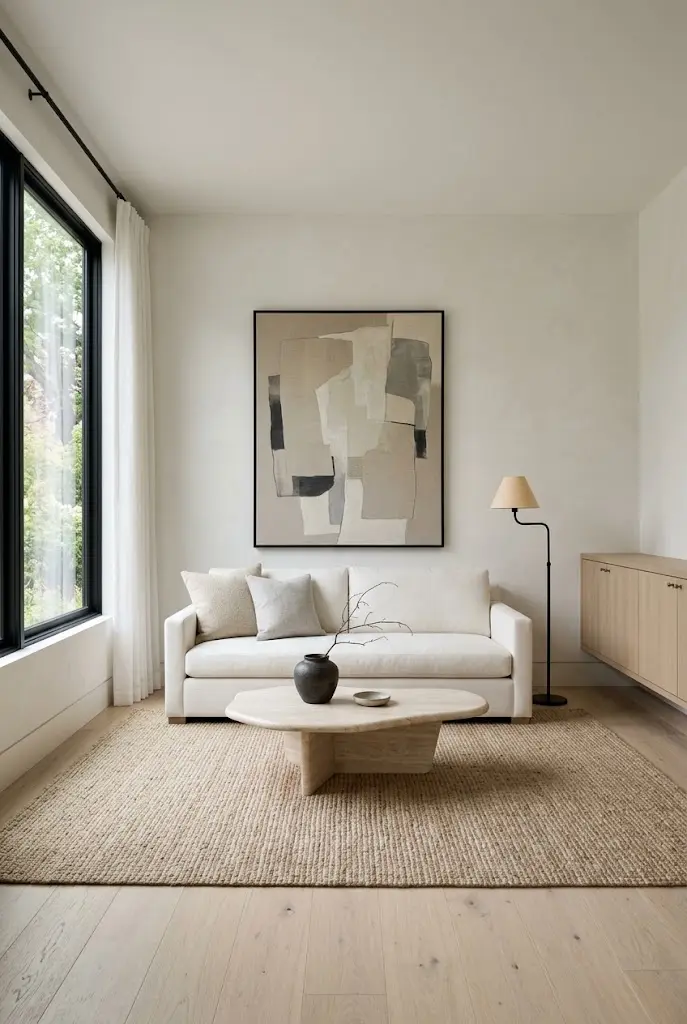
Minimalist living rooms prove that you don’t need lots of furniture or decorative accessories to make a strong impression. The key is to focus on a few well-chosen pieces, generous breathing room, and a thoughtful balance of shapes and materials. Every object should contribute to the comfort or appearance of the room.
Start by removing items that make the space feel crowded. Keep the main seating, a functional coffee table, practical lighting, and a small selection of meaningful decorations. Hidden storage can help keep everyday clutter out of sight.
A minimalist room doesn’t have to look empty. Soft upholstery, natural wood, textured walls, and a large area rug add warmth without compromising the clean aesthetic.
A simple minimalist formula:
- One comfortable sofa with an uncomplicated shape.
- One coffee table with an interesting silhouette.
- One large artwork or a carefully styled decorative arrangement.
- Concealed storage for remotes, books, and daily essentials.
Try this: Leave some empty space on your coffee table and shelves. That visual breathing room is part of what makes minimalist interiors feel intentional.
Add a Statement Coffee Table
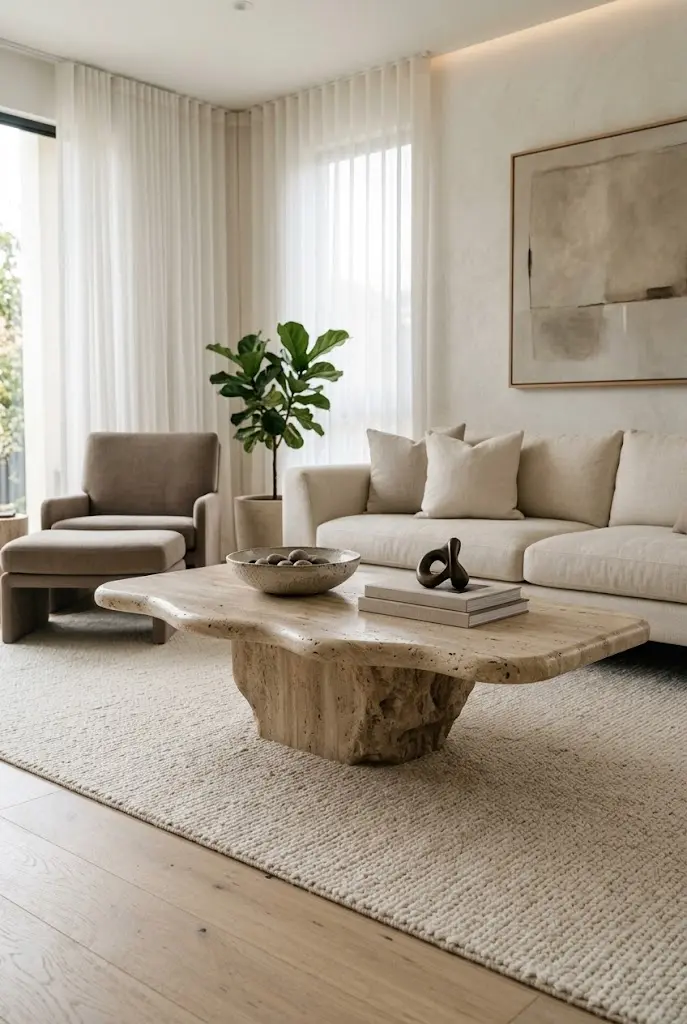
A statement coffee table can become the centerpiece of your living room without requiring a complete redesign. Instead of choosing a basic rectangular table, look for a piece with an interesting shape, distinctive material, or beautifully detailed base.
Travertine and marble offer an upscale stone appearance, while solid wood creates a more organic and approachable atmosphere. Rounded tables are particularly appealing in contemporary spaces because their soft edges balance the straight lines of sofas, windows, and shelving.
Keep the surrounding decor relatively simple so the table has room to stand out. A shallow ceramic bowl, a small stack of design books, or a sculptural vase is often enough.
When selecting your table, consider:
- Scale: It should feel proportional to the sofa.
- Height: Aim for a surface that’s close to the sofa seat height or slightly lower.
- Movement: Rounded edges can make tight walkways feel easier to navigate.
Tip: If your living room is compact, a round or oval table may create a smoother flow than a large square design.
Bring Nature Indoors With Greenery
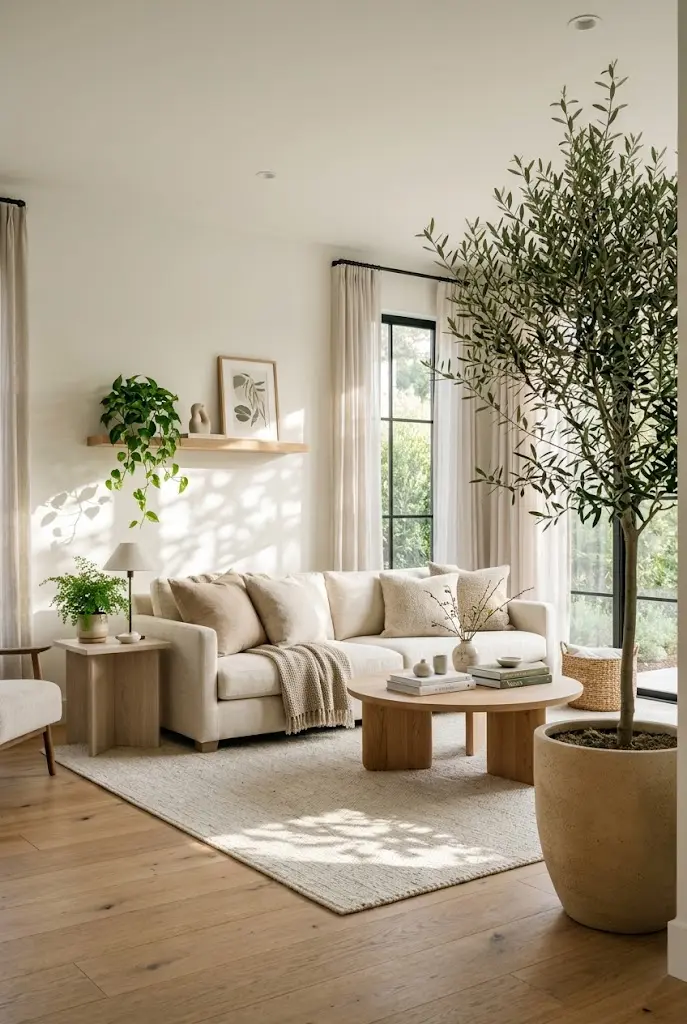
Indoor plants are a simple way to make a modern living room feel fresh, relaxed, and connected to nature. Their organic shapes soften contemporary furniture and introduce color without overwhelming a neutral interior. Even one well-placed plant can make a noticeable difference.
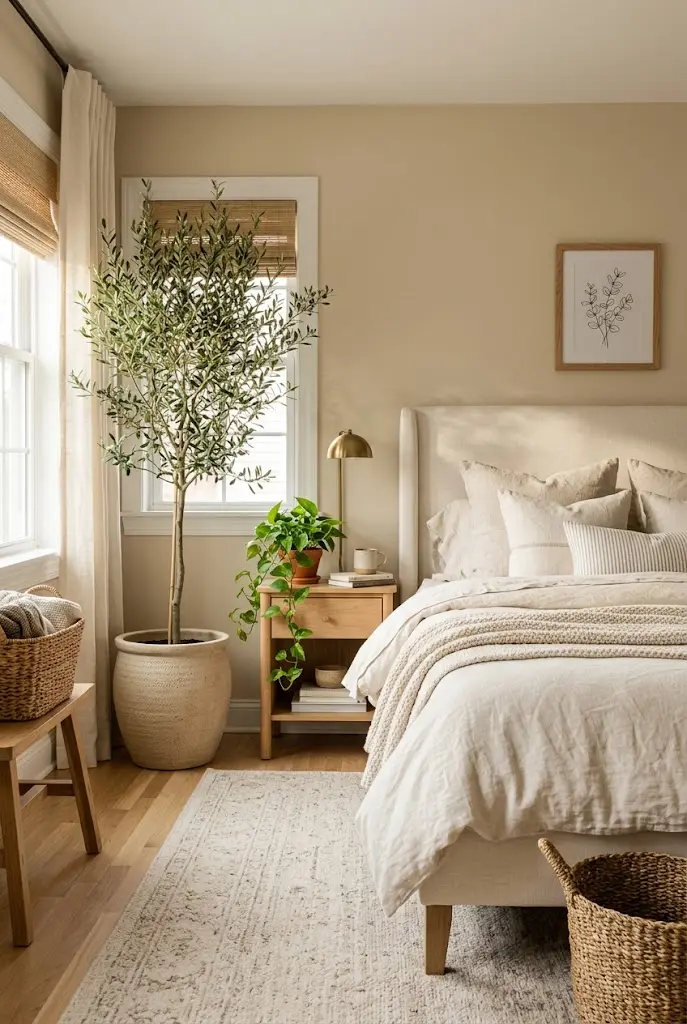
For a spacious room, try a tall olive tree, fiddle-leaf fig, or indoor palm in a textured planter. Smaller spaces can benefit from a trailing pothos on a shelf or a compact plant on a side table.
Think about the light your room receives before choosing a plant. A bright window may suit a fiddle-leaf fig, while lower-light corners are often better for plants such as snake plants or ZZ plants.
To keep the look modern, use planters in a coordinated palette:
- Matte white or sand-colored ceramic.
- Natural terracotta with a subtle finish.
- Woven baskets for a softer, organic touch.
- Charcoal planters for contrast in pale interiors.
Try this: Position a tall plant beside a window or sofa to fill an empty corner and create a more finished-looking arrangement.
Design a Modern Living Room With Black Accents

Black accents can give a light-colored living room definition and a more architectural feel. When used thoughtfully, this deep shade creates contrast without making the space appear dark. The trick is to repeat black in a few carefully chosen places rather than spreading it across every surface.
Imagine a cream sofa paired with a black metal floor lamp, slim black picture frames, and a coffee table with dark legs. These small details connect the room visually and make the lighter furniture stand out.
Black also works beautifully with walnut, oak, beige, and warm white. This combination feels contemporary but doesn’t depend on a short-lived decorating trend.
Consider adding:
- A black-framed mirror above a console.
- A slim metal lamp beside the sofa.
- Dark cabinet handles or shelving supports.
- A few charcoal cushions for a softer transition.
If your living room is small, keep the walls light and use black primarily for accessories and slender furniture details.
Tip: Repeat the accent color at least two or three times around the room so it looks intentional rather than random.
Layer Different Textures for a Cozy Designer Look
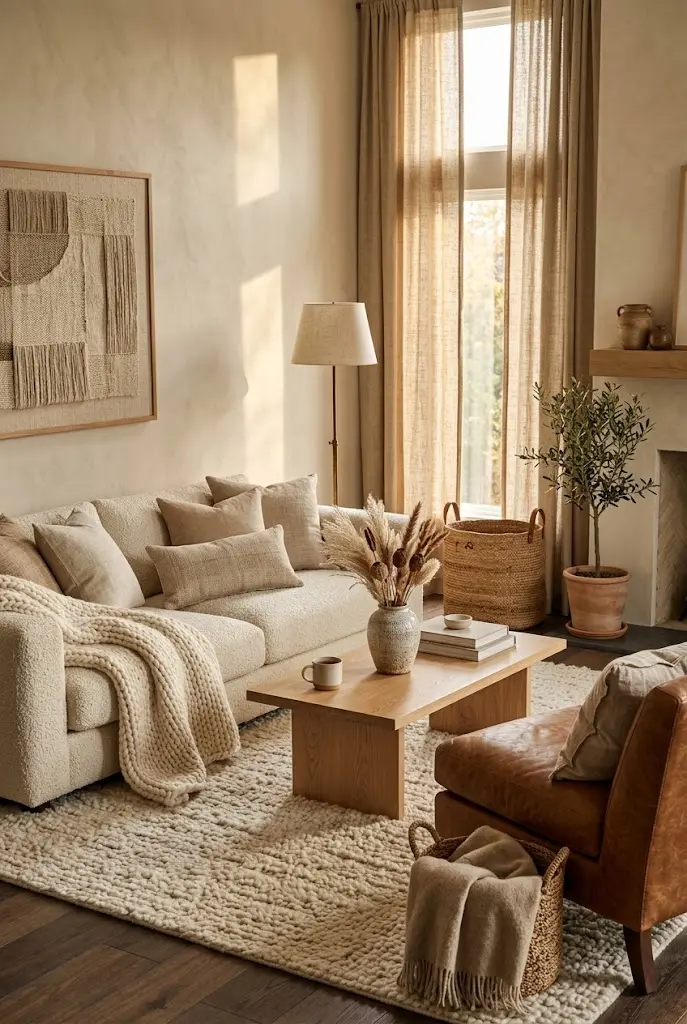
A room can have beautiful furniture and still feel flat if every surface has the same finish. Layering textures gives modern living rooms the depth and warmth that make them feel professionally styled. It also allows you to maintain a restrained color palette without sacrificing visual interest.
Start with the largest surfaces, such as your sofa, rug, and curtains. Then introduce contrasting materials through cushions, throws, lamps, and accessories.
For example, combine a smooth leather accent chair with a nubby bouclé sofa, a chunky wool rug, and a lightly grained oak coffee table. The differences in texture create interest even when the colors remain within the cream, beige, and brown family.
A balanced mix might include:
- Soft linen or cotton upholstery.
- Wool or looped-texture rugs.
- Natural wood and stone surfaces.
- Ceramic accessories with handmade finishes.
- Woven baskets or subtly textured curtains.
Avoid adding so many contrasting materials that the room becomes visually busy. Two or three prominent textures, supported by smaller details, can be enough.
Try this: Drape a soft throw over one sofa arm and add cushions in different fabrics rather than buying a matching set.
Make an Open-Plan Living Room Feel Connected
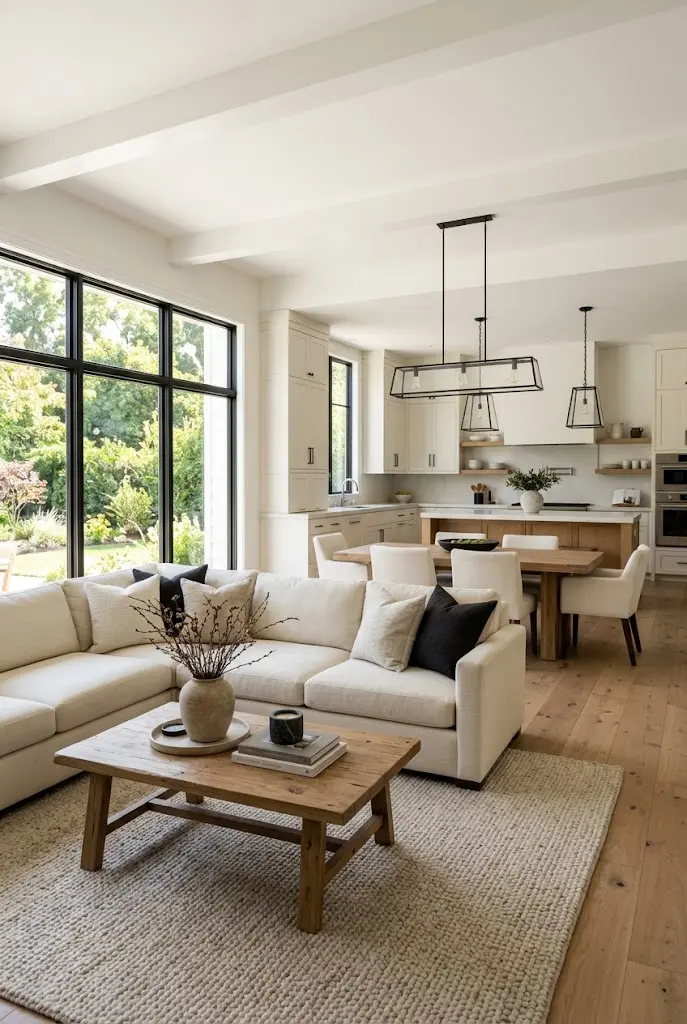
Open-plan living rooms benefit from a design that connects the seating area with nearby dining and kitchen spaces. The goal is to make each zone useful on its own while allowing the entire interior to feel like one thoughtfully designed home.
A large area rug is an excellent way to define the living room without adding a physical divider. Position the sofa and chairs around a coffee table, keeping the main walking routes open between the kitchen, dining table, and seating area.
Repeating materials throughout the space creates continuity. For example, light oak in the coffee table can echo the dining chairs, while black lighting details can connect the living room with the kitchen hardware.
A few practical strategies can help:
- Use a rug to anchor the main seating arrangement.
- Keep furniture heights and visual weight reasonably balanced.
- Repeat two or three colors in adjacent zones.
- Choose pendant and floor lighting that complement one another.
Tip: Avoid pushing every piece of furniture against the walls. A sofa positioned thoughtfully within the room can create a natural boundary between living and dining areas.
Add a Contemporary Accent Wall

An accent wall gives your living room a focal point without requiring you to change the entire space. Modern accent walls can be subtle and sophisticated, using warm paint, wood slats, textured plaster, or a carefully selected wallpaper.
For a timeless look, choose a color that complements the existing furniture. Muted olive, warm greige, clay, and soft taupe can add depth while remaining easy to decorate around.
You can also use the wall behind the sofa or television to establish a more deliberate layout. A large artwork or streamlined console can complete the arrangement, but leave enough open space to prevent the wall from feeling overcrowded.
Popular modern treatments include:
- Painted walls in muted earthy colors.
- Vertical wood slats for architectural interest.
- Subtle limewash-style finishes.
- Minimal geometric paneling.
Before committing to a paint color, test a sample in different lighting conditions. A shade that looks warm in afternoon sunlight may appear cooler at night.
Try this: If you rent your home, consider removable wallpaper or a large framed artwork as a lower-commitment alternative to permanent wall treatments.
Style a Modern Living Room With Natural Wood
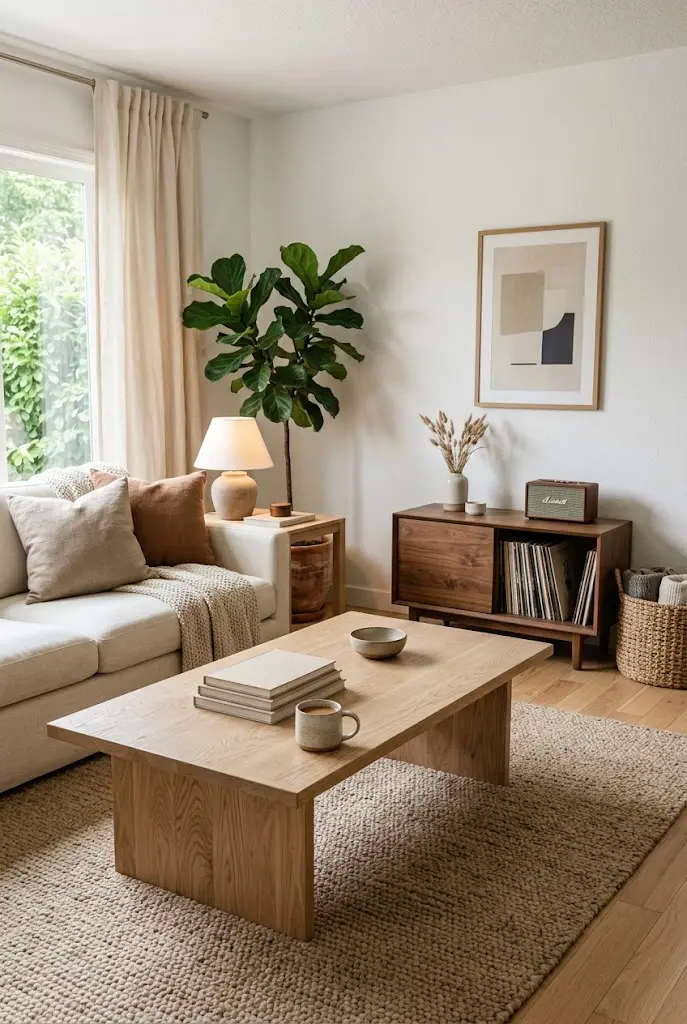
Natural wood adds warmth to modern interiors and keeps clean-lined furniture from feeling too stark. Its subtle grain, organic color variations, and tactile finish introduce character that manufactured surfaces often struggle to replicate.
Light oak is ideal for airy, Scandinavian-inspired spaces, while walnut brings a deeper, more refined mood. You can mix wood tones successfully as long as they share a similar undertone or appear in a balanced arrangement.
Try incorporating wood through your coffee table, media console, side tables, shelving, or picture frames. If your flooring is already wooden, you don’t need every furniture piece to match it exactly.
For an especially inviting result, pair wood with:
- Cream or ivory upholstery.
- Natural linen and wool.
- Matte ceramic accessories.
- Soft green plants.
- Warm, diffused lighting.
The goal is to create a natural rhythm rather than a showroom where every piece comes from the same collection.
Tip: If the room feels too pale, add one medium or dark wood element to introduce contrast and anchor the lighter finishes.
Create a Cozy Modern Living Room With a Sectional Sofa
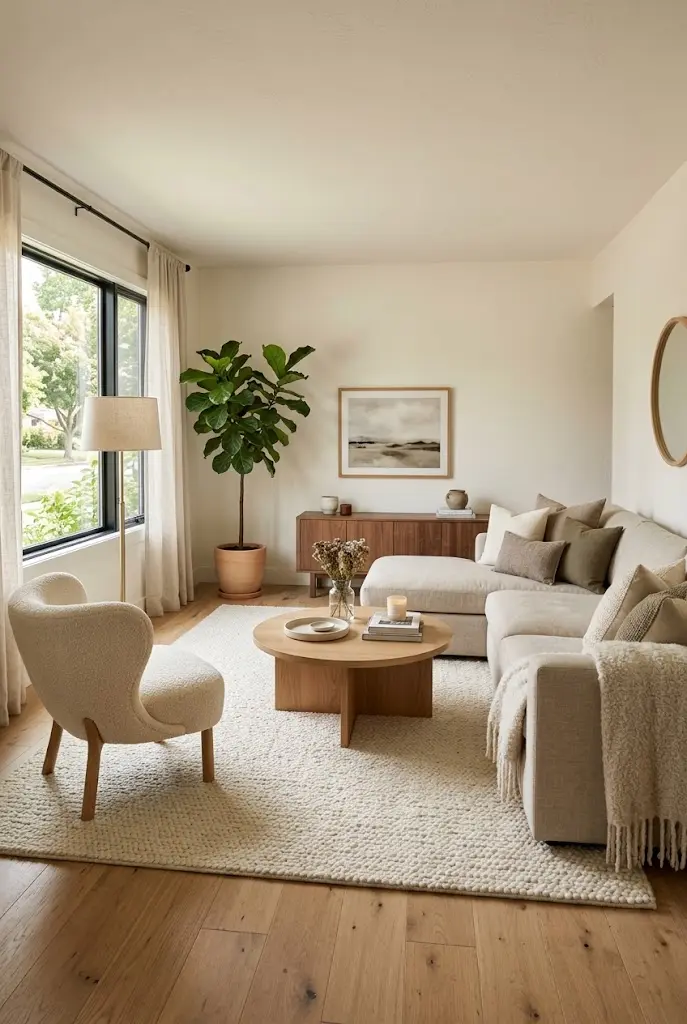
A sectional sofa is an excellent choice when you want a modern living room that feels relaxed and welcoming. Its generous seating makes it ideal for family movie nights, casual entertaining, or stretching out with a good book. With the right silhouette, a sectional can look sophisticated rather than bulky.
An L-shaped sectional works particularly well in open-plan homes because it naturally defines the seating area. A curved or modular design can offer a softer, more flexible alternative.
Keep the surrounding furniture relatively streamlined. A round coffee table, one accent chair, and a generously sized rug can balance the sectional without overcrowding the room.
For a cozy but polished look, consider:
- Cream, warm gray, or oatmeal upholstery.
- A mix of large and small cushions.
- A soft throw in a contrasting texture.
- A floor lamp for evening reading.
- A practical side table within easy reach.
Before buying, measure the available floor area and leave comfortable walkways around the sofa. A sectional should make the room more functional, not harder to navigate.
Tip: If your household includes children or pets, look for removable cushion covers or upholstery designed for easier cleaning.
Use Curved Furniture for a Softer Modern Look
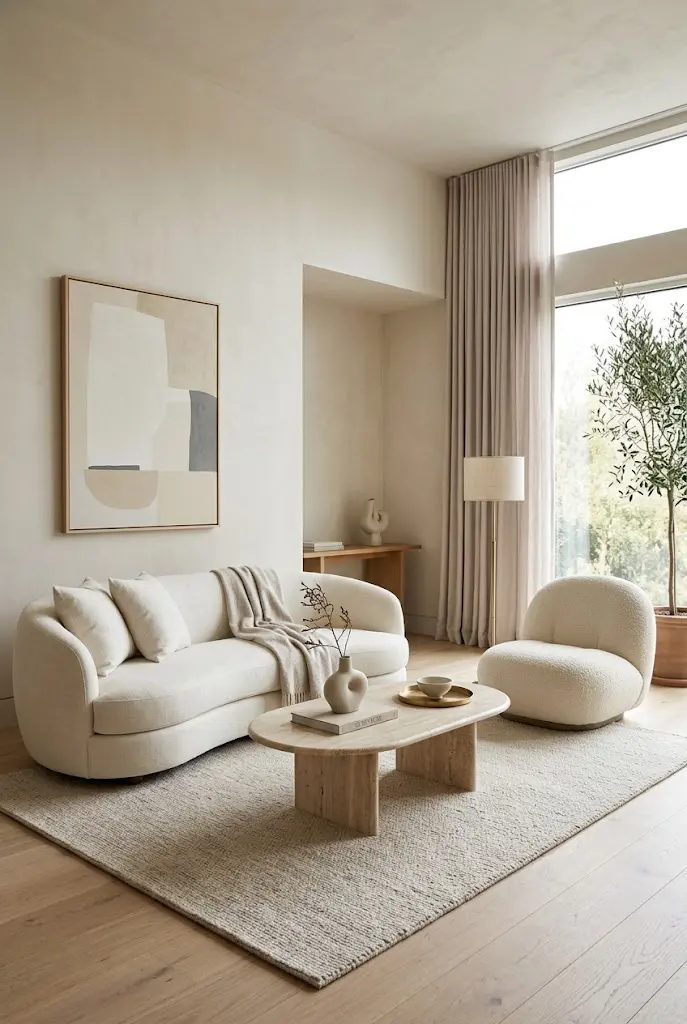
Curved furniture adds movement and softness to modern living rooms. Rounded sofas, oval coffee tables, and sculptural lounge chairs contrast beautifully with straight walls and rectangular windows. The result feels contemporary without appearing overly rigid.
You don’t need to replace all your furniture to achieve this look. A single curved accent chair or rounded coffee table can introduce the same design principle on a smaller budget.
Curves are particularly effective in rooms that have lots of straight edges, such as built-in shelving, square sofas, or linear media cabinets. They help the overall composition feel more balanced.
Try these combinations:
- A curved cream sofa with a simple stone coffee table.
- A rounded accent chair beside a rectangular window.
- An oval coffee table paired with a straight-lined sectional.
- A circular side table beside a structured armchair.
Be mindful of scale. Oversized sculptural pieces can dominate a small room, so measure carefully before purchasing.
Try this: Start with one rounded piece and repeat its shape through a smaller object, such as a circular mirror or rounded ceramic vase.
Add a Large Abstract Artwork

Oversized artwork can make a modern living room feel complete by giving the eye a clear focal point. A single large abstract painting often looks more intentional than several small pieces scattered across a wall.
Choose artwork that connects with your room’s existing colors. A canvas featuring warm white, charcoal, sand, and muted brown can tie together neutral upholstery, dark accents, and natural wood furniture.
The artwork doesn’t have to match the sofa exactly. Instead, look for a shared undertone or one accent color that appears elsewhere in the room.
For the best placement:
- Center the artwork over the sofa or console.
- Keep the frame and canvas proportional to the furniture below.
- Hang it at a comfortable viewing height.
- Allow enough empty wall space around the piece.
If original art isn’t within your budget, consider affordable prints, secondhand finds, or a simple DIY canvas using colors that suit your home.
Tip: For a large statement piece, test its dimensions by temporarily marking the proposed size on the wall with painter’s tape.
Design a Modern Living Room Around a Fireplace

A fireplace can become the natural centerpiece of a modern living room, creating a focal point that feels both architectural and welcoming. Whether you have a traditional fireplace or a contemporary built-in model, thoughtful styling can help it fit your overall design.
A simple limestone surround, smooth plaster finish, or clean-lined mantel creates a timeless foundation. Arrange your seating so the fireplace remains visible without making conversation awkward.
For a balanced look, keep mantel decorations selective. One large artwork, a pair of ceramic objects, or a small arrangement of branches can be more effective than a crowded collection of accessories.
Consider the following details:
- Light stone or warm plaster for a calm contemporary finish.
- Natural wood for warmth and contrast.
- A large rug to connect the seating area.
- Soft lighting to complement the fireplace in the evening.
If you have a working fireplace, follow its manufacturer and local safety guidance when positioning furniture, decorations, and combustible materials.
Try this: If you don’t have a fireplace, create a similar focal point with a low console, oversized artwork, and balanced lighting.
Try a Scandinavian-Inspired Living Room

Scandinavian-inspired interiors combine simplicity, functionality, and warmth. They are an excellent source of inspiration if you want a modern living room that feels bright and uncluttered but still comfortable enough for everyday life.
Start with white or soft neutral walls, pale wood flooring, and furniture with simple silhouettes. Add cozy textiles, natural materials, and warm lighting to prevent the room from feeling too stark.
The Scandinavian look also values practicality. Furniture should be attractive, but it should work for real routines, from reading and relaxing to hosting friends.
A few elements can establish the style:
- Pale oak or birch furniture.
- Neutral linen and cotton upholstery.
- Wool rugs and simple knitted throws.
- Minimalist pendant lights.
- Carefully chosen plants and ceramics.
Avoid filling every surface with decorative accessories. Leave room for the materials and shapes to stand out.
Tip: Choose warm-white bulbs for lamps and floor lights to create a softer atmosphere during long winter evenings.
Introduce Earthy Colors for a Modern Organic Feel

Earthy colors can make a modern living room feel grounded and full of personality. Shades inspired by clay, sand, moss, cinnamon, and warm stone work especially well with natural materials and understated furniture.
Begin with a neutral foundation, then introduce earthy colors through accessories or one prominent piece of furniture. Terracotta cushions can warm up a cream sofa, while an olive-green chair creates a richer focal point.
These shades are particularly effective when paired with wood, woven textures, stone, and greenery. They create a relaxed, organic atmosphere without requiring bright colors or elaborate patterns.
Try this color combination:
- Cream walls and a beige sofa.
- Terracotta cushions or a rust-colored throw.
- Olive-green accents.
- Walnut furniture and handmade pottery.
Keep the strongest colors concentrated in a few areas so the room remains visually balanced.
Tip: If you are unsure about introducing a new color, start with removable accessories. You can experiment with terracotta or olive tones without repainting the room.
Make a Small Living Room Feel Bigger

A small living room can still feel modern, airy, and stylish when every piece has a clear purpose. Rather than squeezing in oversized furniture, focus on visual openness, comfortable circulation, and clever use of vertical space.
A compact sofa with raised legs allows more flooring to remain visible, while a round coffee table can make it easier to move around the seating area. Mirrors can reflect daylight and help the room feel brighter when positioned thoughtfully.
Choose a limited palette to reduce visual clutter. Light walls, coordinated textiles, and a few carefully selected accessories can make the space feel more cohesive.
Practical ideas include:
- Using nesting tables instead of several bulky surfaces.
- Choosing wall-mounted lighting to free up floor space.
- Adding closed storage for everyday clutter.
- Using curtains hung high to emphasize ceiling height.
- Selecting a rug that anchors the seating area without overwhelming it.
Don’t automatically choose the smallest possible rug. A rug that is too small can make a room feel fragmented.
Try this: Measure the furniture footprint and sketch the layout before shopping. Keeping the main walkway clear often matters more than adding another decorative piece.
Create a Modern Living Room With Moody Colors
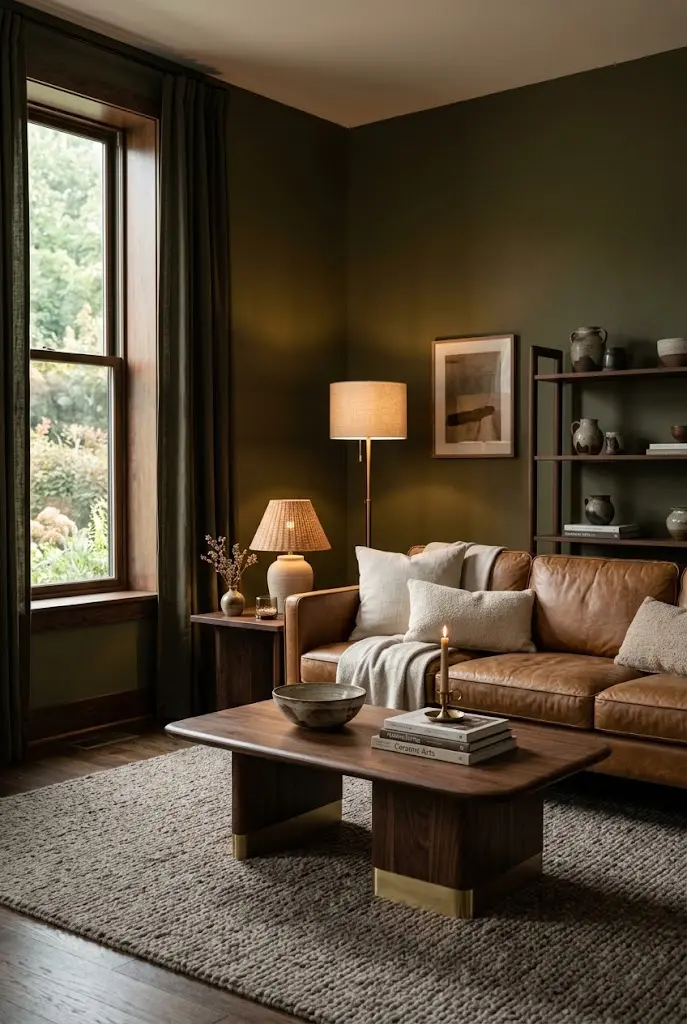
Modern living rooms don’t have to be light and neutral. Deep olive, charcoal, navy, and chocolate brown can create a rich, intimate atmosphere that feels especially inviting in the evening.
The key is to balance darker colors with contrasting textures and thoughtful lighting. A deep green wall looks beautiful with warm wood, brass details, and cream accents. A caramel leather sofa can introduce warmth against charcoal or brown surroundings.
Consider where the room receives natural light before choosing a dark wall color. A well-lit space can support a deeper palette more easily, while a darker room may benefit from lighter upholstery and strategically placed lamps.
To create the look, combine:
- One deep wall color or a dark upholstered sofa.
- Warm-toned wood furniture.
- Soft lamps with warm-white bulbs.
- A textured rug in a complementary neutral.
- Reflective accents such as glass or brushed brass.
Tip: Introduce more than one lighting source so the room feels layered rather than flat after sunset.
Use Floating Shelves for Modern Display Space

Floating shelves provide practical storage and a chance to personalize a modern living room without adding bulky cabinets. Their streamlined appearance works especially well above a console, beside a fireplace, or on a wall that needs a little visual interest.
The best shelf styling balances useful items with decorative pieces. Arrange books horizontally and vertically, add a few ceramic vessels, and include a small framed print or trailing plant. Leave some open space between objects so the display feels relaxed rather than crowded.
Natural oak shelves bring warmth to white walls, while dark shelves can create a more dramatic contrast.
For an intentional arrangement:
- Vary the height of objects.
- Repeat a few materials or colors.
- Keep heavier objects on properly supported shelves.
- Avoid placing every item at equal intervals.
- Leave space for future additions.
If you display valuable or heavy objects, use appropriate mounting hardware and secure the shelves to suitable wall supports.
Try this: Style one shelf first, then step back and adjust the balance before filling the remaining space.
Make Lighting a Design Feature

Lighting does more than help you see; it shapes the mood and character of your living room. A thoughtful combination of overhead lights, floor lamps, and table lamps can make a modern interior feel welcoming throughout the day.
Instead of relying on one bright ceiling fixture, create several layers of illumination. Use general lighting for the whole room, task lighting for reading, and softer accent lighting to highlight artwork or architectural details.
The fixtures themselves can also function as sculptural elements. A curved floor lamp, a simple linen-shaded table lamp, or a contemporary pendant can add personality even when switched off.
A practical lighting plan includes:
- A floor lamp beside a reading chair.
- A table lamp on a console or side table.
- Dimmable overhead lighting where possible.
- Warm-white bulbs for a comfortable evening atmosphere.
Tip: Check the bulb’s color temperature and brightness before purchasing. A fixture may look beautiful, but the wrong light can make your carefully chosen colors feel harsh or washed out.
Add a Modern Media Wall
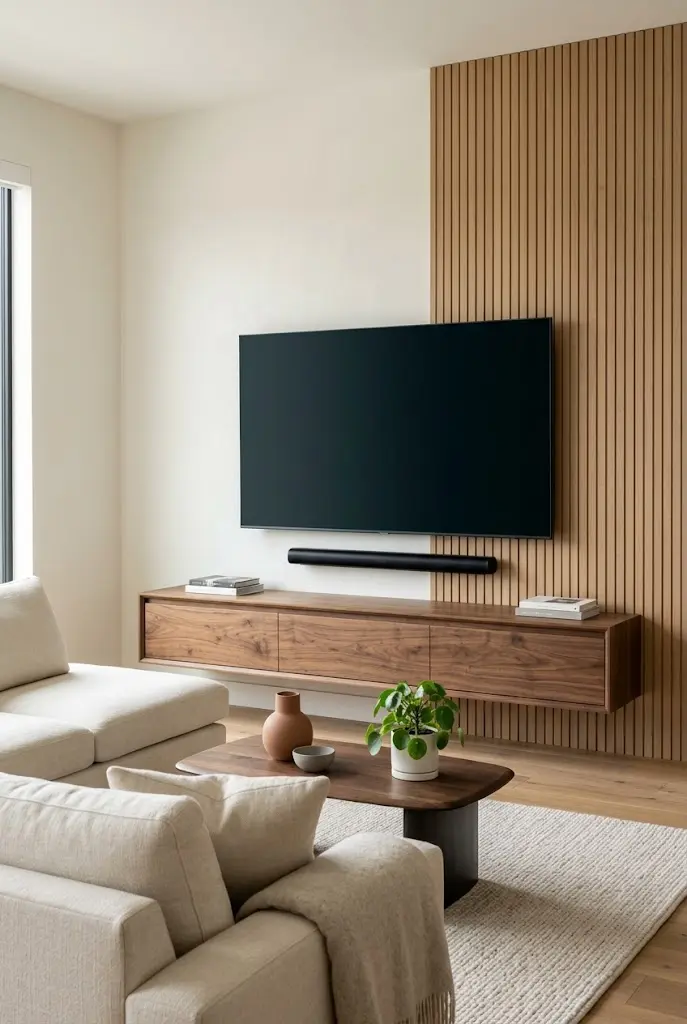
A modern media wall can turn your television area into a polished part of the living room instead of a collection of visible cables and electronics. The best designs combine clean lines, practical storage, and materials that complement the rest of the space.
A floating wood console creates a lighter appearance and provides room for media equipment, remotes, and other essentials. For a more architectural effect, consider a subtle wood-paneled backdrop or a smooth plaster-style wall finish.
Keep the display area simple. A few carefully chosen accessories can add warmth, but too many objects around the television may become distracting.
Useful design choices include:
- A floating oak or walnut console.
- Concealed cable management.
- Closed cabinets for everyday storage.
- Soft backlighting, if desired.
- A restrained palette that complements your sofa and rug.
Measure your television and console carefully to establish comfortable viewing proportions. If you mount the screen, follow the manufacturer’s mounting instructions and use appropriate wall supports.
Try this: Match the media console’s wood tone to another piece in the room, such as the coffee table, to create a connected look.
Bring in a Touch of Mid-Century Modern Style

Mid-century modern design remains popular because it combines functional furniture, organic shapes, and warm wood tones. It can make a contemporary living room feel more distinctive without sacrificing simplicity.
Look for a walnut credenza, a lounge chair with tapered wooden legs, or a coffee table with a sculptural base. These signature details work beautifully with modern neutral upholstery and simple architectural backgrounds.
You don’t need to decorate the entire room in a vintage style. Mixing one or two mid-century pieces with contemporary furniture usually creates a more relaxed, collected appearance.
Try pairing:
- A walnut sideboard with a cream sofa.
- A cognac leather chair with an ivory rug.
- A geometric coffee table with understated ceramics.
- A retro-inspired floor lamp with contemporary artwork.
Pay attention to the proportions of vintage furniture. Slim legs and raised bases can help the room feel open, especially when compared with bulky traditional pieces.
Tip: Browse secondhand furniture shops for authentic vintage finds, and inspect the structure, upholstery, and condition before buying.
Choose a Large Area Rug to Anchor the Room

A well-chosen area rug helps a modern living room feel organized and complete. It visually connects the sofa, coffee table, and accent chairs, creating a clear seating zone even when the room has an open layout.
One common decorating mistake is choosing a rug that is too small. When possible, select a size that allows at least the front legs of the main seating pieces to rest on the rug. This makes the arrangement feel connected rather than scattered.
For a timeless modern look, consider subtle patterns, low-contrast geometric designs, or textured solids. A patterned rug can introduce personality, while a neutral woven rug provides a quieter foundation.
Before shopping, measure the entire seating arrangement rather than the coffee table alone.
Consider these options:
- Wool rugs for a soft, substantial feel.
- Flatweave rugs for a streamlined appearance.
- Textured neutral rugs for understated depth.
- Performance materials for busy family spaces.
Think about cleaning requirements, too. A light rug can look beautiful, but a washable or stain-resistant option may be more practical for high-traffic rooms.
Try this: Use painter’s tape to mark the proposed rug dimensions on the floor before ordering.
Create a Modern Farmhouse Living Room

Modern farmhouse style combines the warmth of traditional country interiors with the cleaner lines of contemporary design. It is a great option if you want a living room that feels welcoming and relaxed without looking overly rustic.
Start with a comfortable sofa, natural wood furniture, and a light neutral palette. Then introduce a few farmhouse-inspired details, such as a reclaimed-wood coffee table, woven baskets, or subtle architectural beams.
The modern element comes from restraint. Instead of filling the room with signs, distressed finishes, and decorative objects, choose a few authentic materials and let them provide character.
A balanced modern farmhouse living room might include:
- A cream slipcovered sofa.
- A reclaimed or natural oak coffee table.
- Black metal lighting.
- Linen curtains and textured neutral cushions.
- Simple ceramic vases and fresh greenery.
This approach works in both newer suburban homes and older houses with original architectural features.
Tip: If your room already has rustic wood beams or brickwork, keep the furniture and accessories simpler so those features remain the focus.
Use Floor-to-Ceiling Curtains for an Elegant Finish

Curtains can dramatically influence how tall, bright, and polished a living room feels. Floor-to-ceiling panels draw the eye upward, soften hard architectural edges, and create a more finished appearance around the windows.
For a modern interior, linen or linen-look curtains in ivory, oatmeal, or soft taupe are versatile choices. Their subtle texture adds interest without competing with the furniture or artwork.
For a taller appearance, mount the curtain rod closer to the ceiling rather than directly above the window frame. Allow the panels to extend toward the floor for a long, uninterrupted line.
Think about the room’s needs before selecting the fabric. Sheer curtains provide privacy while allowing filtered daylight, whereas lined panels offer more light control and insulation.
Practical styling details:
- Choose a rod wide enough to let the curtains sit beyond the window when open.
- Use full-length panels rather than short curtains.
- Match the fabric’s undertone to the room’s palette.
- Consider washable materials for busy households.
Tip: Steam the curtains after hanging them. Smooth, naturally falling fabric can make the entire room feel more refined.
Decorate With Mirrors to Reflect Light
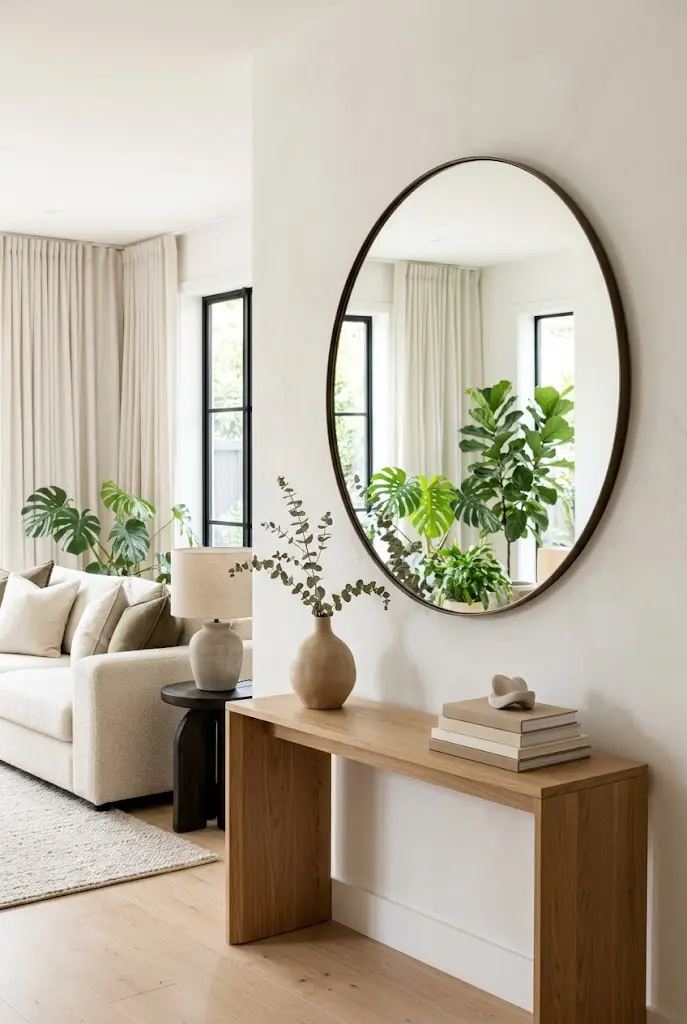
Mirrors can make a modern living room feel brighter and more visually open. They reflect light and surrounding details, adding depth without taking up much floor space. Their frames can also introduce a decorative element that complements your furniture.
A large round mirror above a console creates a softer contrast against straight-lined furniture. An oversized rectangular mirror can look striking in a narrow room, while a tall floor mirror can help fill an otherwise empty corner.
Placement matters more than quantity. Position a mirror where it reflects a window, attractive artwork, or another pleasing part of the room rather than an area filled with clutter.
Consider these styles:
- Round mirrors with slim black frames.
- Frameless mirrors for a minimal appearance.
- Warm brass frames for a more polished look.
- Large leaning mirrors for a relaxed contemporary effect.
Choose a secure mounting method appropriate for the mirror’s weight, especially in homes with children or pets.
Try this: Before hanging the mirror, check the reflection from your usual seating position to ensure it enhances the room.
Add Personality With Accent Chairs
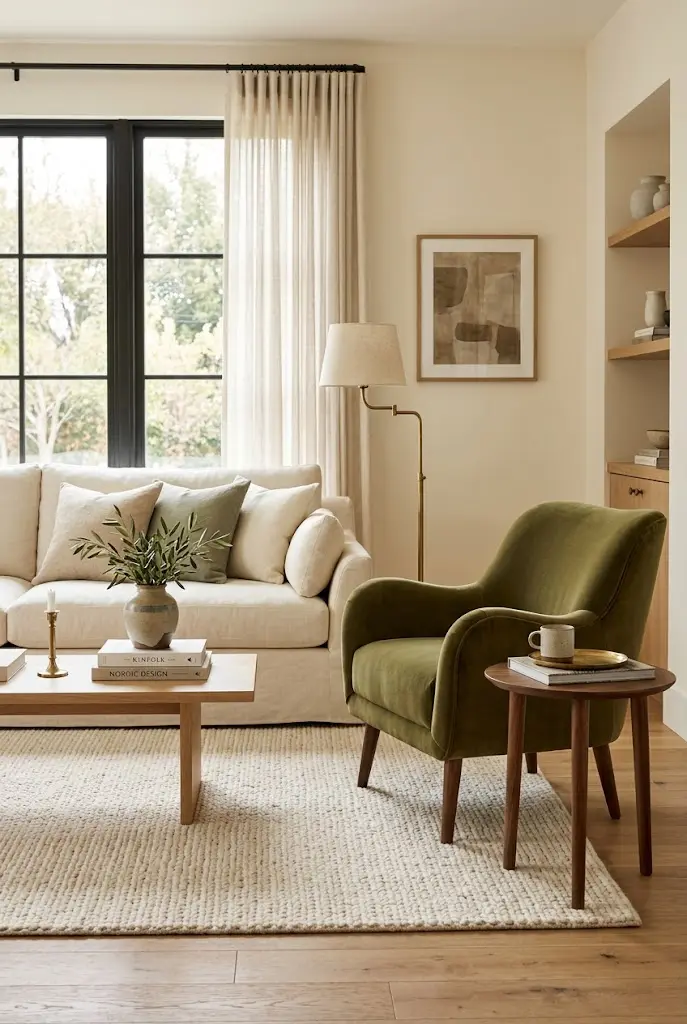
An accent chair is an easy way to introduce color, shape, and personality into a modern living room. It provides additional seating while giving you an opportunity to experiment with a material or silhouette that differs from your main sofa.
For a subtle look, choose a chair in caramel leather, textured beige fabric, or muted olive. If the room already feels neutral, a richer shade can become an attractive focal point without overwhelming the space.
The chair should be comfortable and positioned with a purpose. Angle it toward the sofa to encourage conversation, or place it beside a window to create a quiet reading corner.
When selecting an accent chair, consider:
- Upholstery that complements the sofa rather than matching it exactly.
- A frame material that repeats existing wood or metal finishes.
- A size that leaves enough space for movement.
- A nearby lamp or side table for everyday usefulness.
Tip: Repeat one small detail from the chair elsewhere in the room, such as its color in a cushion or a decorative object.
Create a Modern Living Room With Built-In Storage

Built-in storage can make a modern living room look more organized while providing room for books, decorative objects, media equipment, and everyday essentials. Unlike a collection of separate cabinets, built-ins can be designed to follow the dimensions and architectural style of the room.
A popular approach is to combine open shelves with closed lower cabinets. The shelves provide space for a curated display, while the doors hide items that would otherwise create visual clutter.
For a timeless design, use warm white cabinetry with oak shelves or choose a single color that blends into the wall. This creates a cohesive appearance and allows the room’s furnishings to stand out.
Think about how you’ll use the storage before deciding on the layout:
- Closed cupboards for electronics, games, and household items.
- Adjustable shelves for books and changing displays.
- Integrated lighting to highlight selected objects.
- A mix of open and closed sections for visual balance.
If a custom installation isn’t within your budget, freestanding bookcases with coordinated finishes can achieve a similar effect.
Try this: Style only a portion of your open shelves with decorative objects and leave the rest for books and useful items.
Refresh Your Living Room With Seasonal Accessories
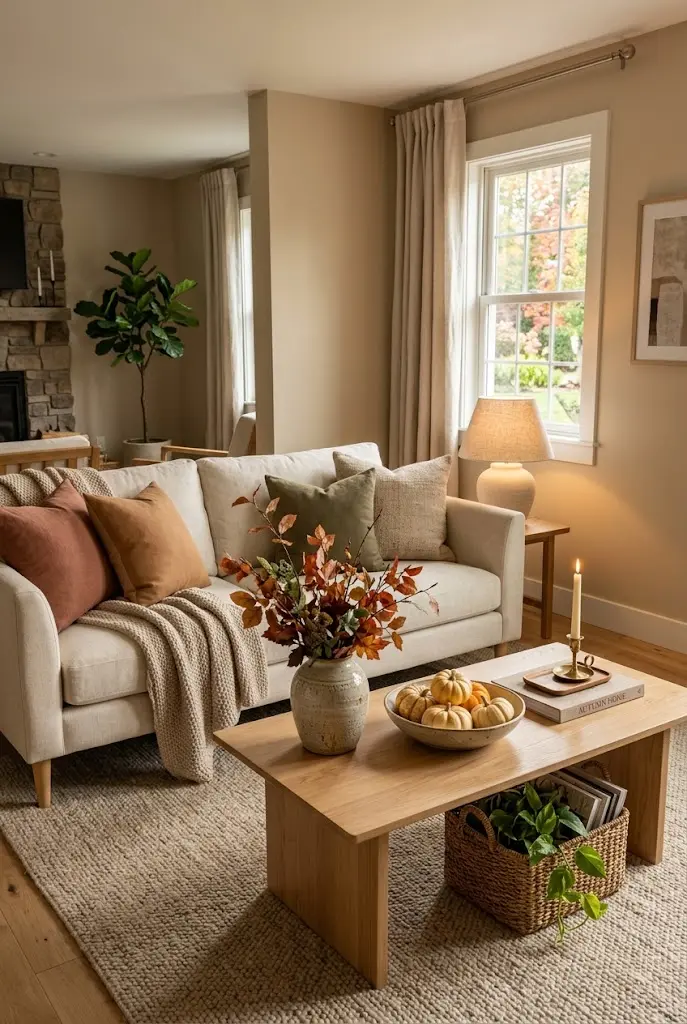
A timeless modern living room doesn’t need to be redesigned every season. You can keep your larger furniture pieces consistent and update smaller accessories to reflect the changing mood of the year.
In spring and summer, try lighter linen cushions, fresh greenery, and pale ceramic decorations. As autumn arrives, introduce cinnamon, rust, or olive tones through a throw blanket and a few carefully chosen accents. In winter, soft wool textiles and warm lighting can make the room feel especially inviting.
The benefit of this approach is that it keeps your home feeling fresh without requiring a large budget or additional storage for bulky seasonal decorations.
A simple seasonal refresh might involve:
- Changing two or three cushion covers.
- Swapping a lightweight throw for a heavier one.
- Adding seasonal branches or fresh flowers.
- Updating the coffee table with a different ceramic piece.
- Adjusting lighting and textures to suit the season.
Keep your main color palette consistent so the room still feels like your home throughout the year.
Tip: Store seasonal cushion covers and smaller accessories together in labeled containers so future updates are easy.
Create a Timeless Modern Living Room That Reflects Your Style
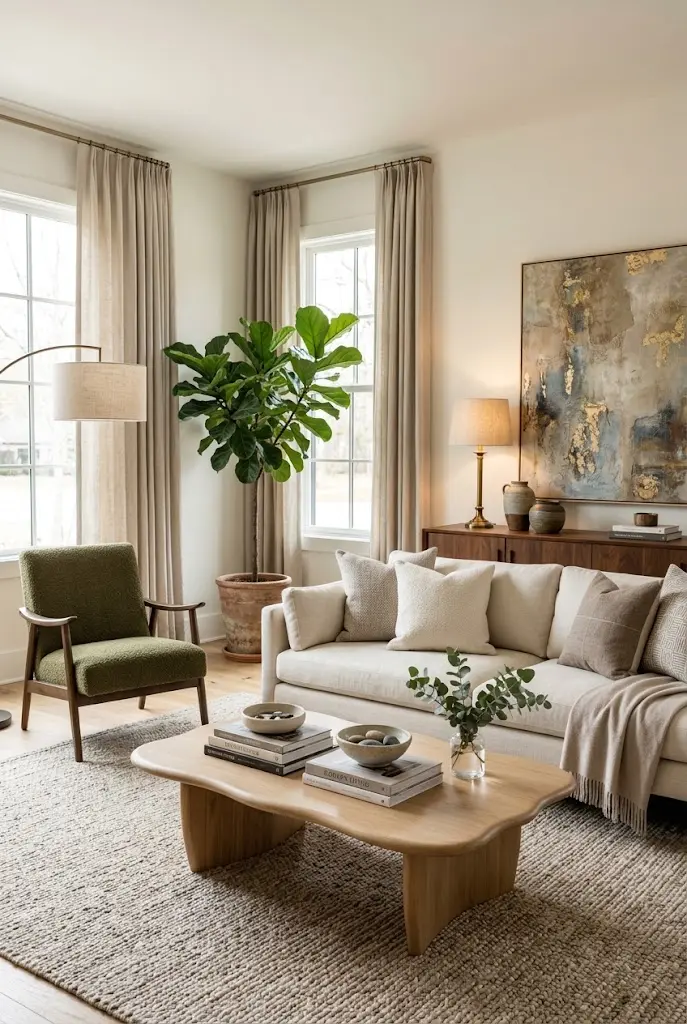
The most successful modern living rooms combine contemporary design with the things that make a home feel personal. Instead of copying every trend, focus on furniture, colors, and materials that suit your daily routine and will continue to feel comfortable over time.
Begin with a dependable foundation: a well-proportioned sofa, a practical coffee table, comfortable lighting, and a rug that connects the seating area. Then layer in your favorite details, whether that’s natural wood, meaningful artwork, sculptural accessories, or a collection of plants.
A timeless room doesn’t have to be completely neutral. Personal photographs, colorful art, vintage finds, and treasured objects can make a contemporary interior feel more authentic.
Keep a few principles in mind:
- Invest in comfort and quality for the furniture you use most.
- Choose a main palette that works with your existing finishes.
- Mix old and new pieces to create character.
- Leave enough space for everyday movement.
- Update accessories when your tastes change rather than replacing everything.
Most importantly, let the room evolve. You can create a beautiful home gradually, making thoughtful changes as your needs and preferences develop.
Try this: Before buying a new decoration, ask whether it improves the room’s comfort, function, or overall appearance. If it does none of these things, you may not need it.
Final Thoughts
Modern living room design is all about finding the right balance between beauty, comfort, and everyday practicality. From warm neutral palettes and sculptural coffee tables to natural wood, cozy sectional sofas, and thoughtfully layered lighting, even small changes can make your home feel more inviting.
You don’t have to recreate an entire designer interior to achieve a fresh look. Start with one idea that fits your space, whether it’s adding an accent chair, updating your curtains, or introducing a few natural textures. Build from there, choosing pieces that complement what you already own.
The best modern living room is one that looks beautiful in photographs but feels even better when you’re actually living in it.
Save these 30 modern living room ideas to Pinterest so you can revisit your favorite designs whenever you’re ready to refresh your home.
Do you like this personality?