25 Aesthetic Living Room Decor Ideas to Give Your Home a Cozy Designer Feel
Your living room should feel like a place where you can truly relax while still looking beautiful enough to inspire every guest who walks through the door. The right colors, textures, furniture, lighting, and decorative accents can completely change the atmosphere of the space. You do not need an enormous budget or a professionally designed home to create a polished look. With a few thoughtful changes, even a simple living room can feel warm, stylish, and intentional. These aesthetic living room decor ideas combine cozy comfort with timeless design details that work beautifully in American homes. From layered neutrals to natural materials and statement lighting, there is plenty of inspiration to save for your next home refresh.
Layered Neutral Tones for a Calm Living Room

Layered neutral tones can instantly give a living room a sophisticated yet comfortable appearance. Start with a warm ivory or soft beige sofa and build around it with shades of cream, taupe, oatmeal, and light brown. Instead of choosing everything in exactly the same color, use slightly different tones to create depth. Add textured pillows, a chunky throw, a natural woven rug, and warm wood furniture to keep the room from feeling flat. A few darker accents, such as a charcoal vase or walnut side table, can provide contrast. Keep the walls relatively simple so the layered textures become the main visual attraction. This approach works especially well in open-concept American homes where the living room needs to feel connected to the rest of the space. The result is relaxed, timeless, and easy to update seasonally.
Create a Cozy Corner With a Reading Chair
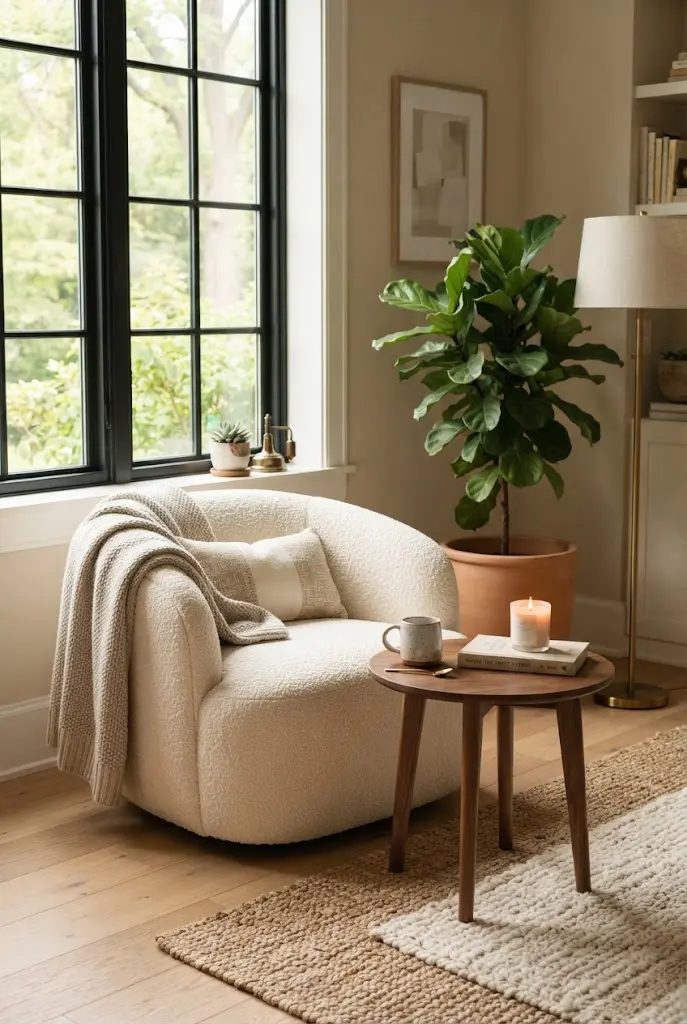
A dedicated reading corner can make an aesthetic living room feel more personal and inviting. Choose a comfortable accent chair with a curved silhouette, soft upholstery, or natural woven material and position it beside a window or floor lamp. Add a small round side table where you can place a coffee mug, candle, or favorite book. A plush throw draped casually over the chair creates an effortless lived-in feeling. Keep the surrounding area visually simple so the chair becomes a small focal point without overwhelming the room. A tall indoor plant can soften the corner and introduce natural color. For a designer-inspired appearance, repeat one or two colors from the main sofa in the chair’s cushion or nearby accessories. This is also a practical way to make unused living room space feel intentional rather than empty.
Add a Large Statement Area Rug
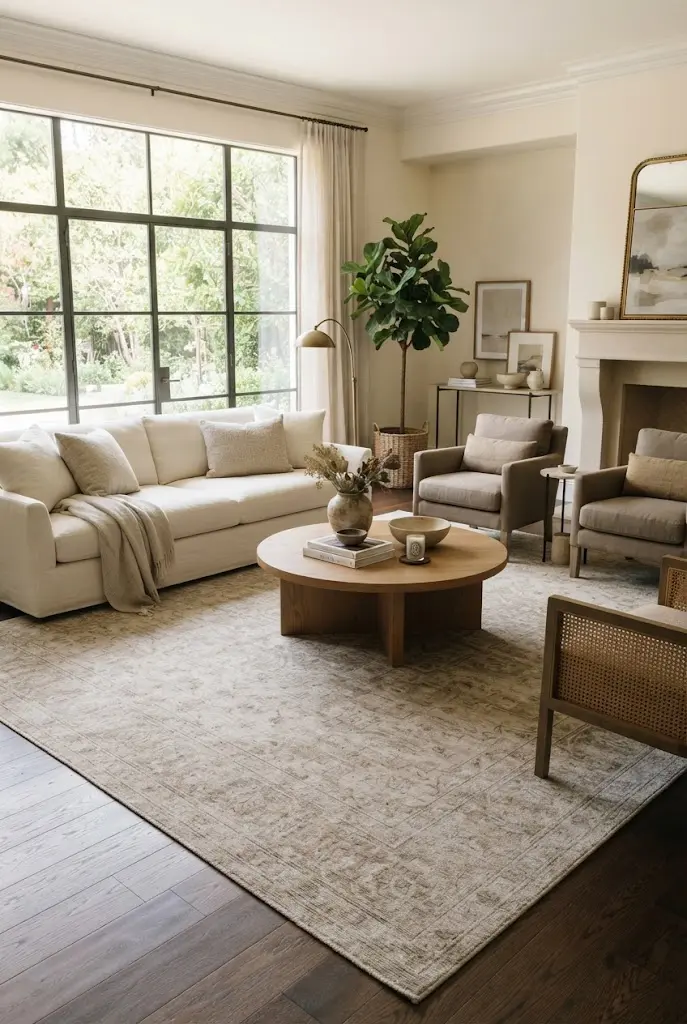
A large area rug can completely transform the proportions and atmosphere of a living room. Rather than choosing a small rug that sits underneath only the coffee table, select a size that allows at least the front legs of the sofa and chairs to rest on it. Warm ivory, faded beige, subtle geometric patterns, and vintage-inspired designs work particularly well with aesthetic interiors. A textured rug can also make a room feel softer and more welcoming underfoot. If your furniture is simple, the rug can introduce gentle visual interest without becoming overwhelming. For a designer look, coordinate the rug with your pillows, curtains, or artwork rather than matching every item exactly. In an American living room, a generously sized rug can also help visually define the seating area in an open floor plan. Choose a durable material if the space receives heavy family traffic.
Use Warm Ambient Lighting
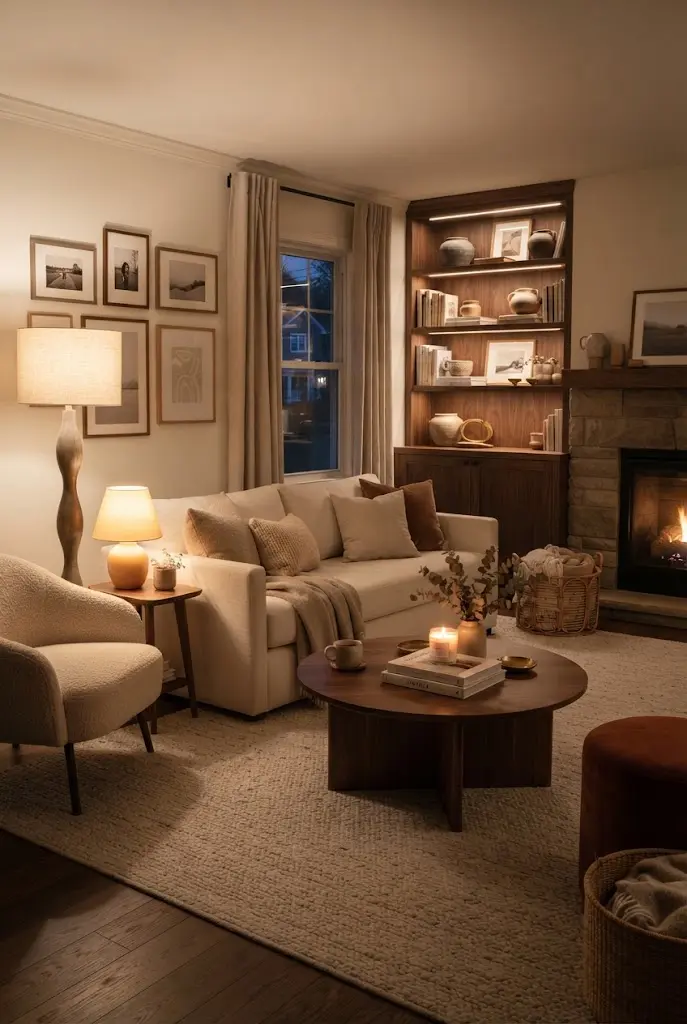
Lighting is one of the easiest ways to make a living room feel dramatically more aesthetic. Instead of depending entirely on an overhead fixture, create several layers of light at different heights. Place a floor lamp beside the sofa, add a table lamp to a console, and use small decorative lamps to create a gentle evening glow. Warm-white bulbs generally create a much more comfortable atmosphere than harsh, cool lighting. Choose fixtures with linen shades, aged brass details, ceramic bases, or sculptural silhouettes to make the lighting itself part of the decor. During the day, allow natural sunlight to fill the room through lightweight curtains. At night, the combination of multiple warm light sources can make neutral furniture feel especially cozy. This layered approach creates the polished atmosphere often associated with professionally designed living rooms.
Bring in Oversized Indoor Plants
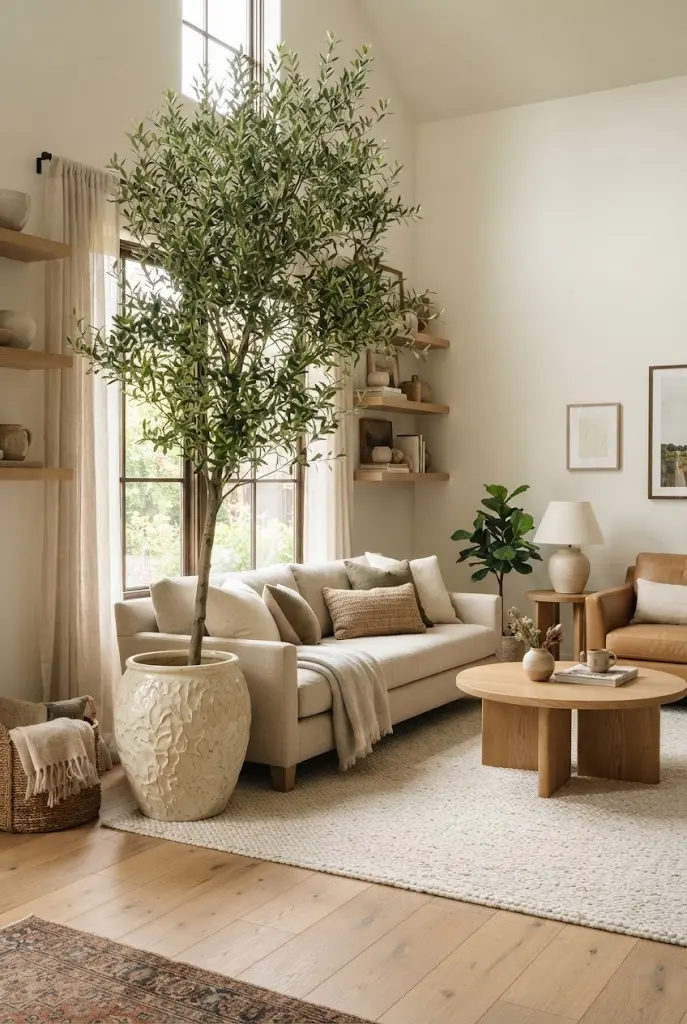
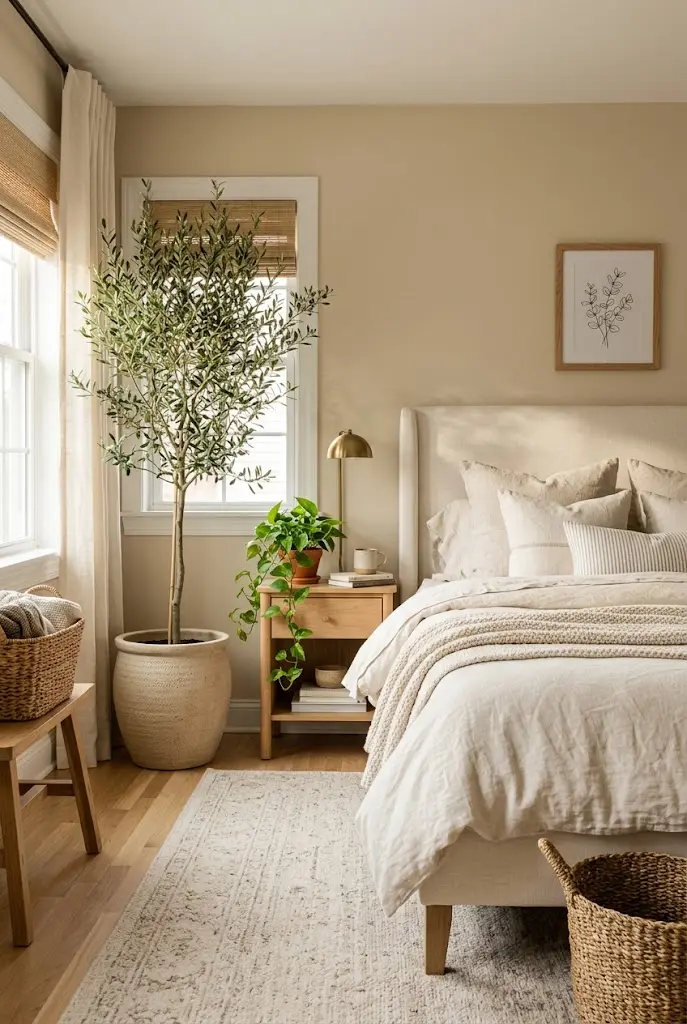
Large indoor plants can make an aesthetic living room feel fresher, warmer, and more connected to nature. Place a tall fiddle-leaf fig, olive tree, rubber plant, or similar leafy plant in an empty corner where its height can balance the furniture. Use a simple ceramic, stone, or woven planter in a neutral color so the greenery remains the focal point. Smaller plants can be placed on shelves, side tables, or a console, but avoid filling every surface. The goal is to create intentional greenery rather than a crowded indoor jungle. Plants also look particularly beautiful against cream walls and natural wood furniture. If your living room has limited natural light, select varieties suited to the conditions or consider realistic high-quality faux greenery. A combination of organic shapes and neutral furnishings can give the entire room a relaxed designer feel.
Style a Soft Boucle Sofa

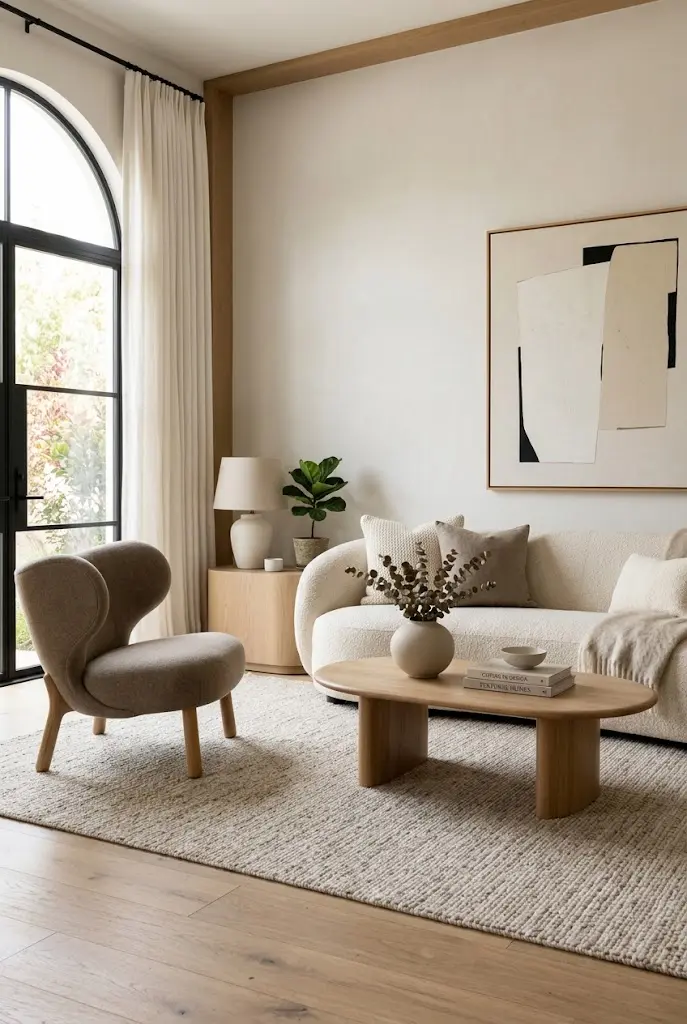
A boucle sofa can instantly introduce softness and visual texture into an aesthetic living room. Its nubby fabric creates an inviting appearance that works beautifully with contemporary, organic, and minimalist interiors. Choose a curved or gently rounded silhouette if you want the room to feel more modern and sculptural. Pair the sofa with smooth wood, stone, or metal accents to create contrast against the textured upholstery. Layer it with pillows in linen, cotton, and soft woven fabrics rather than using matching boucle everywhere. A neutral boucle sofa also gives you plenty of flexibility when changing accent colors throughout the year. Keep the surrounding furniture relatively streamlined so the sofa remains the main feature. This combination can create the cozy designer look many homeowners want without relying on excessive decoration.
Mix Vintage Pieces With Modern Furniture
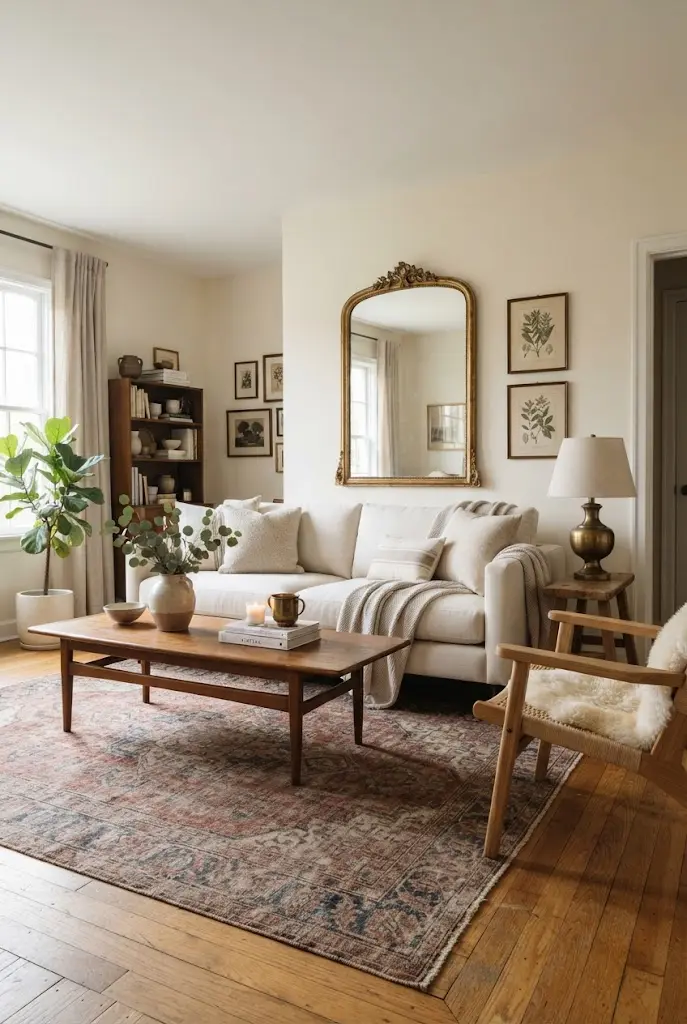
Mixing vintage accents with contemporary furniture can give your living room a more collected and authentic personality. Start with a clean modern sofa and introduce an older-looking wooden coffee table, vintage-inspired rug, antique-style mirror, or traditional ceramic piece. The contrast keeps the space from looking like everything was purchased from the same showroom. Choose vintage pieces with colors that connect naturally to your existing palette. A warm walnut table can work beautifully with cream upholstery, while an aged brass lamp can add character without making the room feel traditional. Avoid using too many statement antiques because one or two distinctive pieces often create a stronger effect. This style is especially useful if you enjoy decorating with pieces collected during travels, family treasures, or secondhand finds. The final room should feel thoughtfully assembled rather than perfectly coordinated.
Create a Gallery Wall With Personal Art
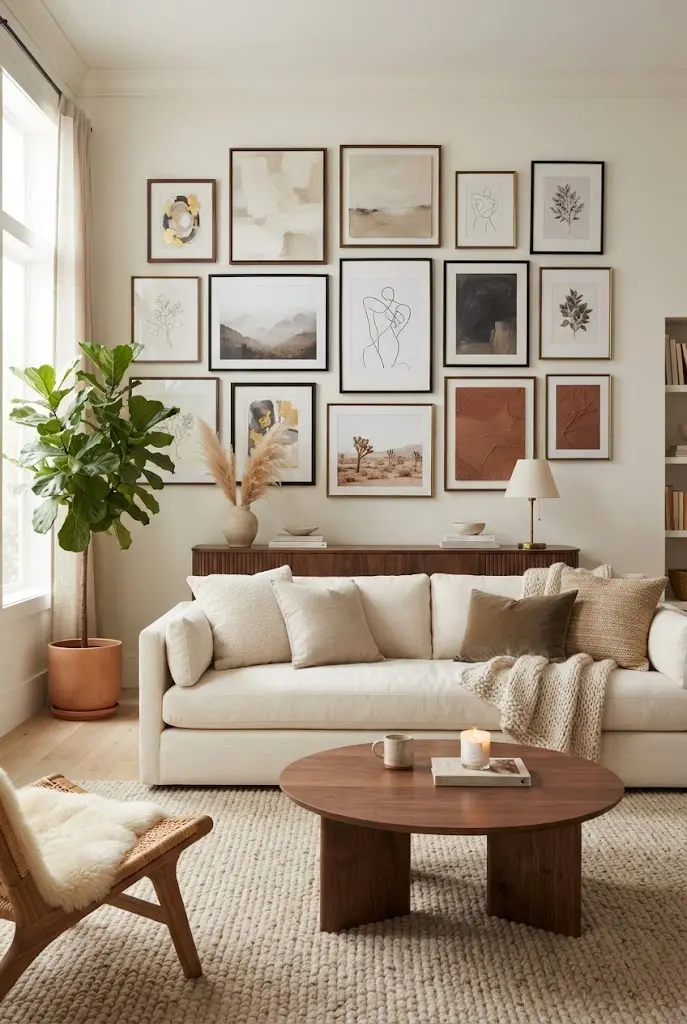
A thoughtfully arranged gallery wall can make a living room feel much more personal while adding visual interest above a sofa or console. Choose artwork that shares a similar color family rather than making every frame identical. Black, walnut, brass, or natural wood frames can work beautifully against neutral walls. Mix photography, abstract prints, line drawings, landscapes, and small decorative pieces to create variety. Before hanging everything, arrange the pieces on the floor to test spacing and proportions. Keep the overall arrangement connected to the width of the furniture beneath it. If you prefer a calmer aesthetic, use mostly neutral artwork with one or two subtle accent colors. Personal photographs, travel artwork, and meaningful prints can make the room feel unique rather than copied from a catalog.
Add a Sculptural Coffee Table
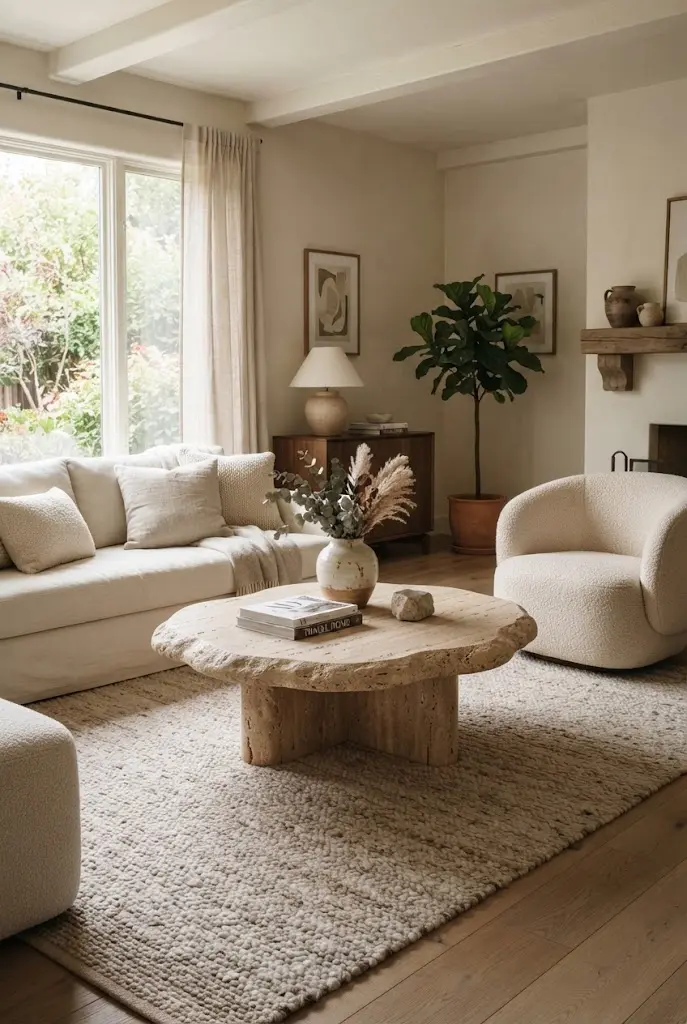
A sculptural coffee table can turn an ordinary seating arrangement into a more sophisticated focal point. Look for a table with a rounded, organic, pedestal, or softly geometric shape instead of a basic rectangular design. Natural wood, travertine-look stone, marble, and textured finishes can all contribute to an elevated aesthetic. Keep the styling on top simple with a shallow tray, a few books, a ceramic vase, or a small decorative object. The table should have enough empty surface area to remain practical for everyday use. Pairing a sculptural table with a simple sofa creates a pleasing contrast between soft and structured shapes. Round tables are also particularly useful in homes where people frequently move around the seating area because they eliminate sharp corners. This small furniture upgrade can have a surprisingly large impact on the room’s overall appearance.
Use Natural Wood for Warmth
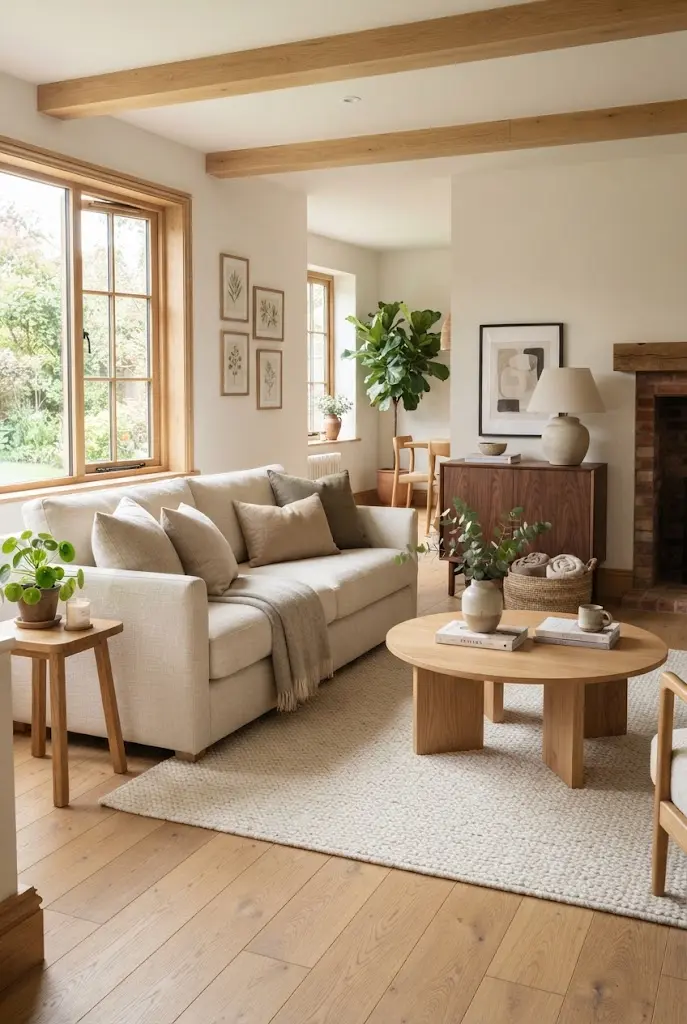
Natural wood is an excellent way to prevent a neutral living room from feeling cold or overly minimalist. Introduce wood through a coffee table, media console, shelving, side tables, or decorative stools. Light oak creates a fresh Scandinavian-inspired feeling, while walnut brings deeper warmth and sophistication. Avoid matching every wood item perfectly; subtle variation can make the room feel more natural and collected. Pair wood with linen, cotton, wool, stone, and ceramics to create a pleasing mix of textures. A wooden console beneath artwork can also provide warmth along a blank wall without adding visual clutter. For a cozy American home, natural wood works especially well with cream upholstery and soft earthy colors. The result is timeless enough to remain attractive even as other decor trends change.
Decorate With Oversized Floor-Length Curtains

Floor-length curtains can make a living room appear taller, softer, and more luxurious. Hang the curtain rod several inches above the window frame and extend it beyond the window edges so the fabric frames the opening instead of covering much of the glass. Choose linen or linen-look curtains in cream, warm white, oatmeal, or soft beige for a relaxed aesthetic. Allow the panels to reach the floor, with a slight break or graceful pooling depending on your preferred style. During the day, keep them open to maximize natural light, then close them in the evening for a cozy atmosphere. Avoid overly heavy patterns if your room already contains several decorative elements. The simple vertical lines of full-length curtains can add an elegant architectural quality while making the entire room feel more finished.
Introduce Earthy Accent Colors
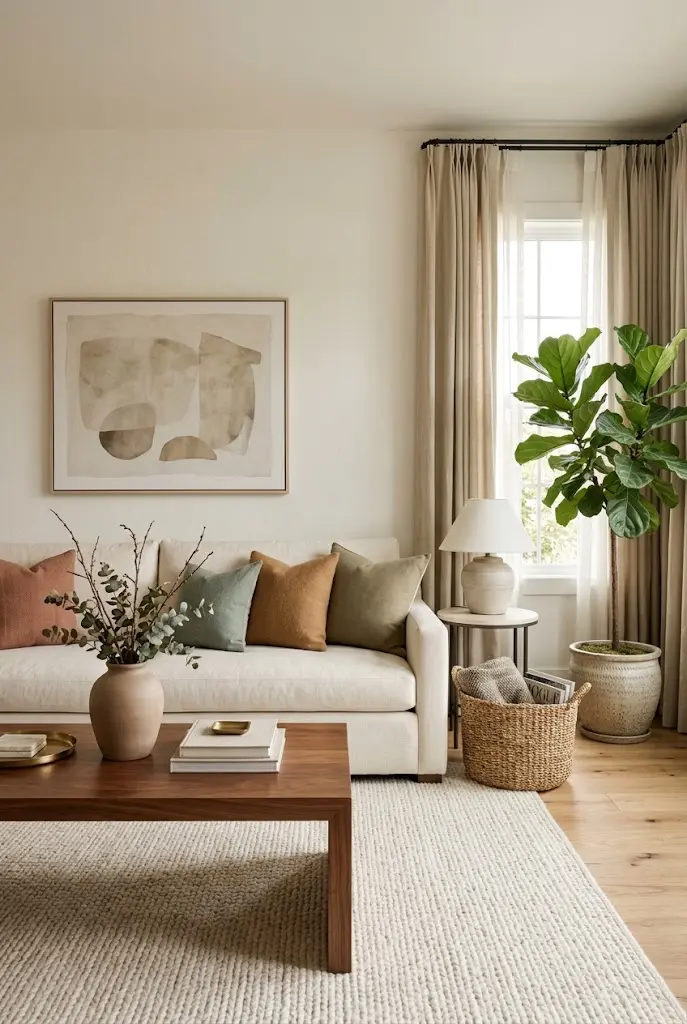
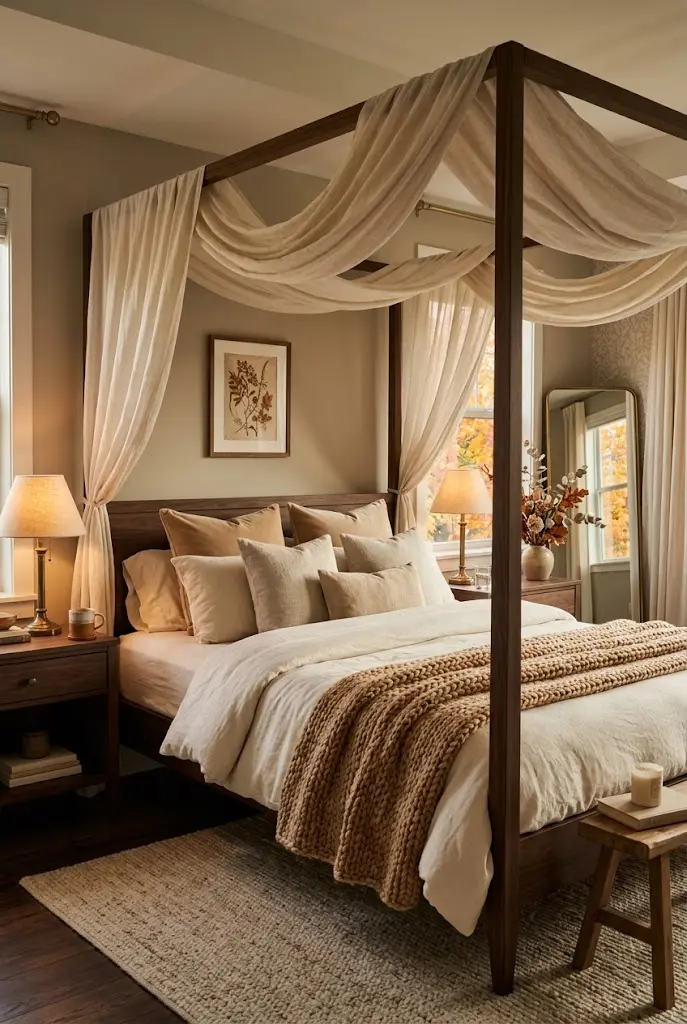
Earthy accent colors can bring personality to a neutral living room without sacrificing a calm atmosphere. Consider terracotta, muted olive, clay, warm caramel, dusty sage, or soft rust as small doses of color. You can introduce these shades through pillows, artwork, ceramics, blankets, or an accent chair rather than repainting the entire room. Choose two or three related earthy shades and repeat them subtly throughout the space. For example, a terracotta pillow can connect with a clay vase and warm-toned artwork. This repetition makes the room feel intentional while still allowing the neutral base to remain dominant. Earthy colors also work beautifully with natural wood, woven materials, and cream upholstery. The result is warm, grounded, and especially inviting during the fall and winter months.
Create an Organic Modern Living Room

Organic modern style combines clean contemporary shapes with natural materials and comfortable textures. Begin with a simple cream or beige sofa and introduce rounded furniture, light wood, stone accents, woven materials, and plenty of soft textiles. Keep the color palette close to nature with ivory, sand, taupe, warm brown, muted green, and soft gray. Instead of filling shelves with decorations, select a few sculptural objects and allow plenty of negative space. Curved furniture can soften the straight lines often found in modern architecture. Large plants and natural daylight add another layer of warmth. This aesthetic is particularly versatile because it can work in apartments, suburban homes, and larger open-concept spaces. The key is balancing simplicity with enough texture and organic detail to keep the room comfortable rather than stark.
Add an Oversized Mirror
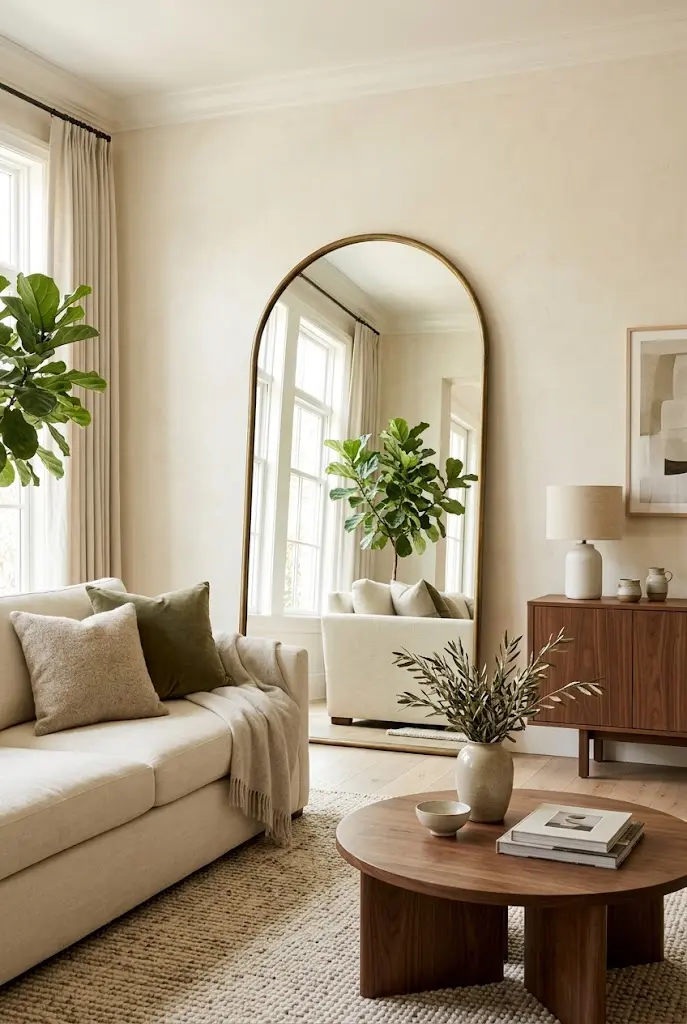
An oversized mirror can make a living room feel brighter and more spacious while also functioning as a major decorative feature. Lean a large framed mirror against a wall for a relaxed designer look or mount it above a console for a more traditional arrangement. Choose an organic wood frame, aged brass finish, or thin black frame depending on the room’s style. Position the mirror where it can reflect natural light, greenery, or an attractive architectural feature. Avoid placing it where it reflects clutter because the reflection effectively becomes another visual layer in the room. A large mirror is particularly useful in smaller apartments or living rooms with limited windows. When surrounded by warm neutral furniture and simple decor, it can create an elegant sense of openness without adding visual heaviness.
Create a Cozy Fireplace Focal Point

A fireplace naturally creates a strong focal point and can become the heart of an aesthetic living room. Whether your home has a traditional fireplace, a modern electric model, or a simple built-in design, keep the surrounding decor cohesive. A plaster, limewash, or warm stone finish can create a relaxed contemporary appearance. Add a simple mantel arrangement with a mirror, artwork, ceramic vessels, or a few candles instead of overcrowding the area. Arrange seating so the fireplace remains visually accessible and inviting. During colder months, layer the nearby seating with soft blankets and textured pillows. Neutral colors can make the fireplace feel timeless, while wood accents add warmth. If you have a television above the fireplace, use surrounding decor carefully so the wall does not become visually overwhelming.
Style Open Shelving With Intention
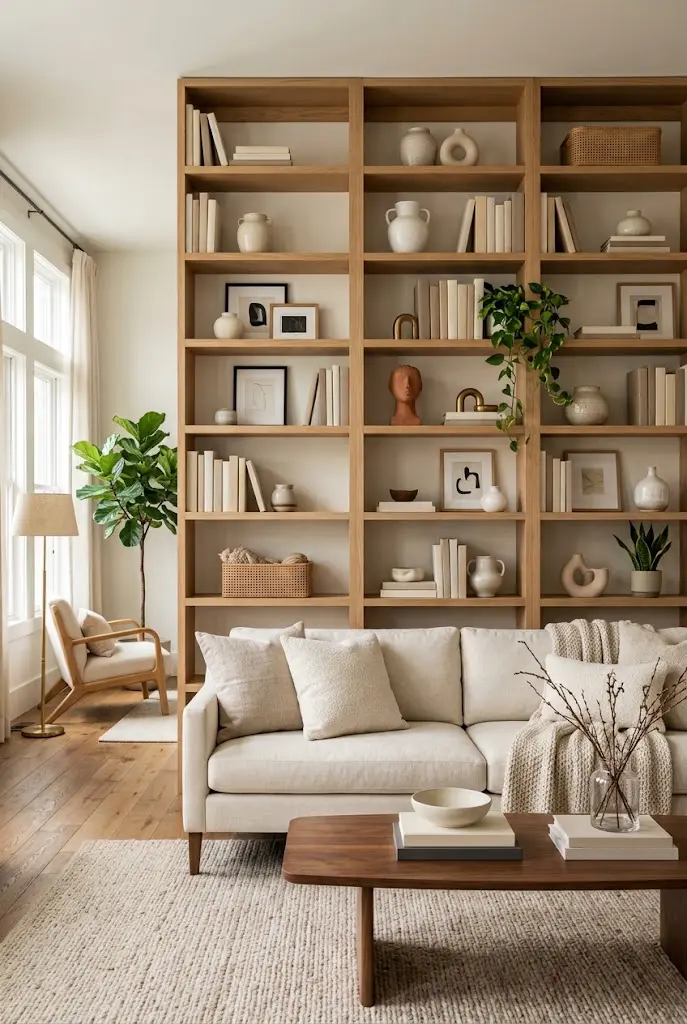
Open shelving can become one of the most attractive features in a living room when it is styled thoughtfully. Instead of filling every shelf, leave generous empty space between objects to create a calmer appearance. Combine books, ceramic vases, framed art, small plants, woven baskets, and sculptural objects in different heights. Group a few items together while allowing other pieces to stand alone. Use a consistent color palette so the shelves look cohesive with the rest of the room. Natural wood shelving can add warmth, while white or plaster shelves create a lighter contemporary appearance. Rotate decorative pieces throughout the year to keep the display feeling fresh. Most importantly, avoid treating every shelf like a storage area; attractive negative space is part of the design.
Choose a Soft Curved Accent Chair

A curved accent chair can add architectural interest while making a living room feel softer and more welcoming. Look for rounded backs, curved arms, or a sculptural silhouette in boucle, linen, velvet, or textured upholstery. Place one chair beside the sofa rather than buying several identical chairs. This creates visual variety while maintaining a cohesive seating arrangement. A warm cream chair works beautifully in a neutral room, while muted olive, caramel, or dusty rose can introduce subtle color. Add a small lumbar pillow or casually draped throw if the chair needs extra comfort. Position it near a window, fireplace, or floor lamp to create a natural destination within the room. Curved furniture is especially effective when paired with a round coffee table because the repeated shapes create a harmonious flow.
Layer Textures for Extra Coziness

Texture is one of the most important ingredients in creating a cozy aesthetic living room. Combine smooth linen upholstery with chunky knits, woven baskets, soft wool rugs, nubby boucle, natural wood, and handmade ceramics. These materials create visual depth even when the room uses a limited color palette. Layer several pillow fabrics rather than purchasing a complete matching set. Add a throw across the sofa and use a textured rug beneath the seating area to make the space feel softer. Natural materials are especially effective because their subtle imperfections add character. Keep the colors relatively coordinated so the variety of materials does not make the room feel chaotic. This technique works in almost any decorating style and is an easy way to make a simple room feel more expensive and thoughtfully designed.
Use a Minimalist TV Wall
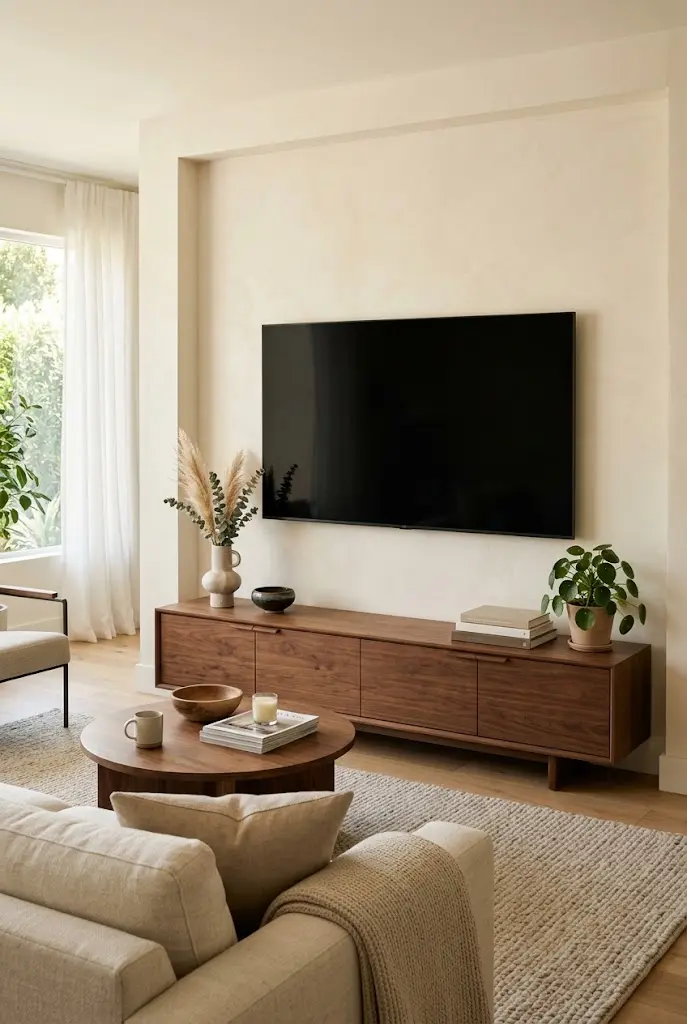
A minimalist TV wall can help a living room look polished without making the television the only visual focus. Mount the television neatly and surround it with simple architectural details, such as a wood media console, floating shelves, vertical paneling, or a plaster-effect wall. Keep electronics and cables concealed whenever possible. Add only a few decorative objects so the area remains visually calm. A warm wood console can soften the technology while connecting the television wall to the rest of the room. If the room is small, choose furniture with clean lines and closed storage to reduce visible clutter. A neutral wall color helps the television blend more naturally into the space. The finished result should feel functional for everyday entertainment while still fitting seamlessly into the overall aesthetic.
Add a Cozy Window Seat
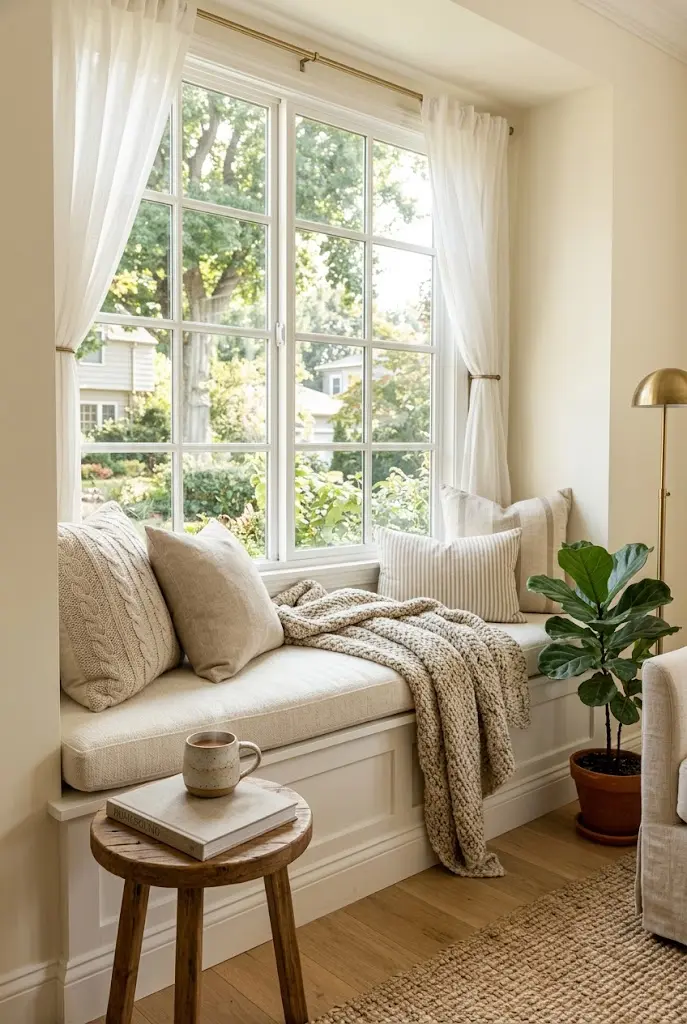
A window seat can turn an unused architectural space into one of the most charming areas of the living room. If your home already has a deep window ledge, add a custom cushion in a durable neutral fabric and layer it with comfortable pillows. If a built-in seat is not possible, create a similar feeling with a narrow upholstered bench placed directly beneath a large window. Add a soft throw and a small nearby table for books or a drink. Keep the window treatment light enough to preserve the natural view and daylight. A window seat is particularly attractive when surrounded by greenery and warm natural materials. It creates a peaceful spot for reading, relaxing, or simply enjoying morning sunlight. This detail can give an ordinary living room a custom-designed character.
Decorate With Oversized Neutral Artwork

Oversized artwork can make a living room feel finished without requiring dozens of decorative accessories. Choose one large abstract canvas, landscape painting, or minimalist artwork with colors that complement the existing room. Soft beige, ivory, gray, muted brown, and dusty green are easy to coordinate with neutral furniture. Hang the artwork above the sofa or on the largest uninterrupted wall so it has enough space to breathe. A large piece often looks more sophisticated than several tiny pieces scattered across the room. Choose a frame that works with the furniture, such as natural wood for an organic look or thin black for a contemporary appearance. Keep nearby surfaces simple so the artwork remains the focal point. This is an especially useful approach for renters because a single large piece can make a dramatic difference without major renovations.
Create a Warm Scandinavian-Inspired Space
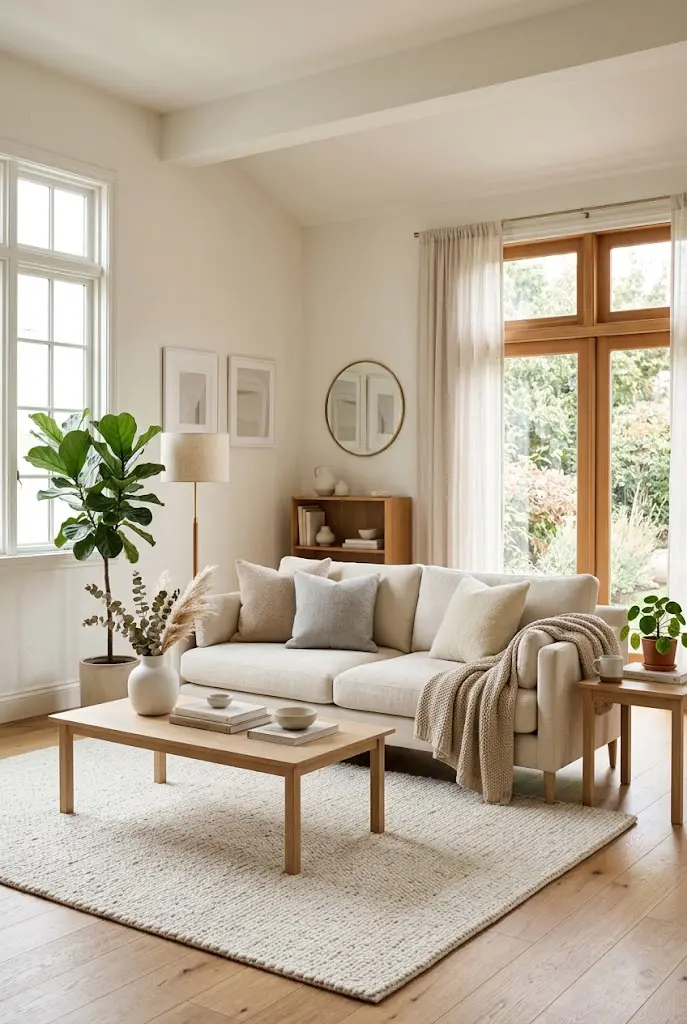
Scandinavian-inspired decor is ideal for homeowners who want their living room to feel bright, comfortable, and uncluttered. Start with a palette of warm white, soft gray, beige, pale wood, and muted earthy accents. Choose furniture with simple silhouettes and combine it with cozy textiles to prevent the room from feeling sterile. A light oak coffee table, cream sofa, wool-look rug, and simple ceramic accessories can establish the foundation. Add greenery for a natural touch and keep decorative objects intentionally limited. Soft curtains and plenty of daylight help create the airy atmosphere associated with Scandinavian interiors. Unlike an overly minimalist room, this approach prioritizes comfort alongside simplicity. The result is an inviting living space that feels modern but still practical for everyday family life.
Use a Warm Earth-Toned Accent Wall

An accent wall can give an aesthetic living room more architectural depth without requiring a complete makeover. Instead of a bright or highly saturated color, consider warm taupe, clay beige, muted mushroom, soft olive, or a subtle terracotta shade. Paint the wall behind the sofa, fireplace, or media console to create a natural focal point. Keep the remaining walls lighter so the accent feels intentional rather than overwhelming. Pair the color with cream upholstery, natural wood, woven accessories, and neutral artwork. Matte or low-sheen finishes can create a sophisticated appearance by reducing harsh reflections. This approach is particularly effective when you want more personality but still prefer a calm interior. Test paint samples under both daytime and evening lighting before committing because warm colors can change noticeably throughout the day.
Add Cozy Seasonal Layers
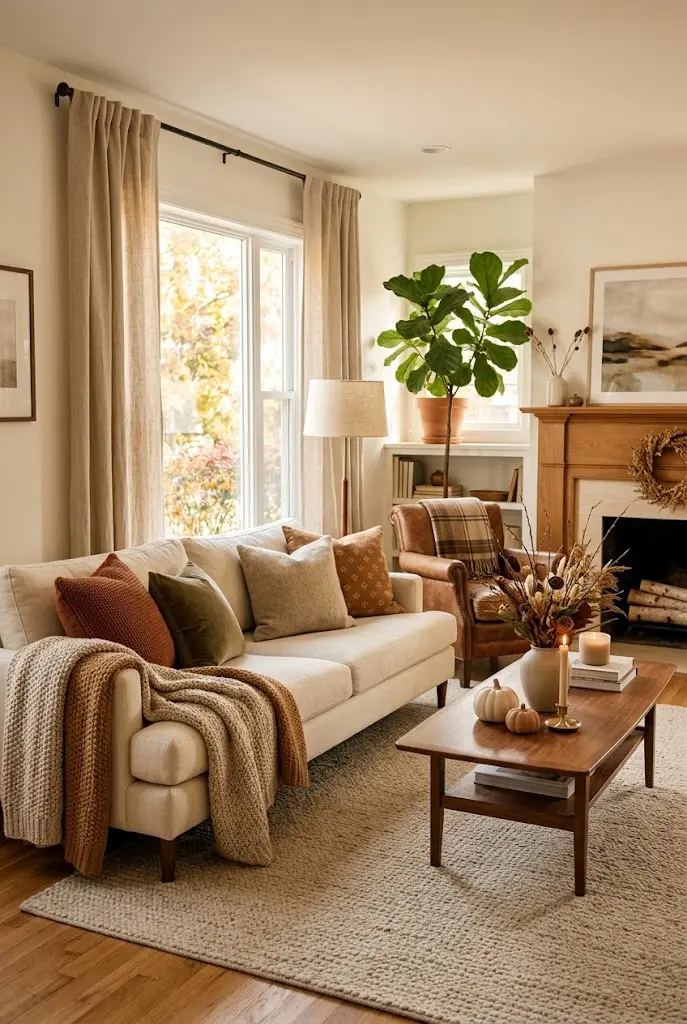
Seasonal accessories are an easy way to keep an aesthetic living room feeling fresh throughout the year without replacing major furniture. For fall, introduce warm rust, caramel, cinnamon, and olive accents through pillows, throws, and ceramics. During winter, emphasize chunky knits, soft wool textures, candles, and deeper neutral tones. Spring can bring lighter fabrics, fresh greenery, and soft pastel accents, while summer works beautifully with linen, woven materials, and airy colors. Keep the primary furniture and larger pieces neutral so seasonal updates remain affordable and simple. Store small accessories in labeled bins and rotate them as the seasons change. This approach allows the room to evolve without losing its overall design identity. The key is to add seasonal atmosphere through texture and small details rather than filling every surface with themed decorations.
Keep Decor Minimal but Meaningful
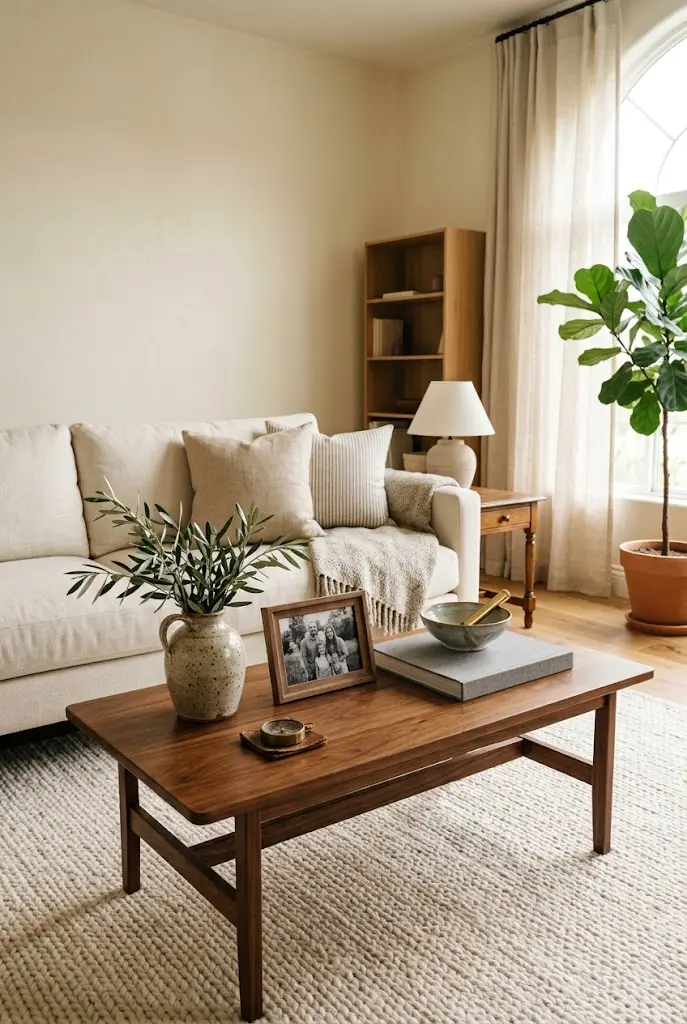
One of the most effective aesthetic living room decor ideas is to decorate with fewer but more meaningful pieces. Instead of covering every table, shelf, and wall with accessories, select items that have a purpose or personal connection. A favorite piece of artwork, handmade ceramic vase, vintage bowl, travel souvenir, or family photograph can add more personality than a large collection of generic decorations. Use negative space around these objects so each one has room to stand out. Keep practical items organized in attractive baskets, cabinets, or closed storage. A neutral foundation allows meaningful pieces to become visual highlights without creating clutter. This approach also makes cleaning and seasonal decorating much easier. The goal is not to create an empty room but to create a space where every visible item feels intentional, useful, beautiful, or personally significant.
Final Thoughts
Creating a beautiful living room does not require copying a showroom or buying an entirely new furniture set. The most inviting spaces usually come from combining a comfortable foundation with thoughtful layers of texture, natural materials, lighting, artwork, greenery, and personal details. Start with one or two changes that will make the biggest difference in your space, such as a larger rug, warmer lighting, new pillows, or a statement piece of artwork. From there, gradually build a room that reflects how you actually live. Whether your style leans organic modern, Scandinavian, traditional, minimalist, or comfortably eclectic, these aesthetic living room decor ideas can help you create a space that feels both stylish and genuinely welcoming.